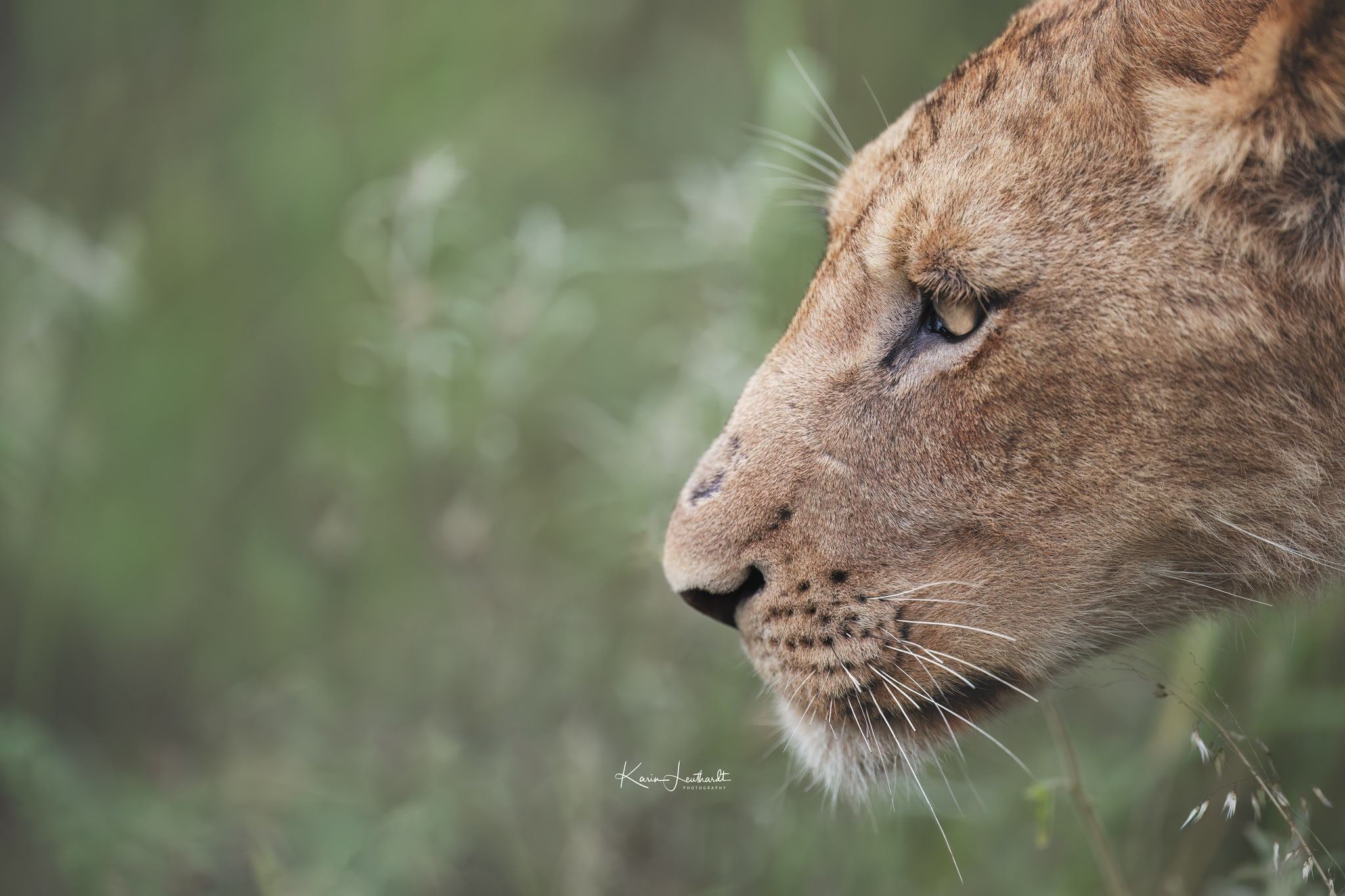
Wildlife in Tanzania
With the Serengeti and the Ngorongoro Conservation Area, Tanzania covers the largest part of the Serengeti Mara ecosystem, home to around 1.3 million wildebeest. Between late January and March the herds calve on the short-grass plains of Ndutu and the southern Serengeti, drawing lions, cheetahs and hyenas in large numbers.
- 18 species
- 10 threatened
- Tanzania photo trip, 28 Feb to 7 Mar 2027 →
Wildlife in Tanzania
-
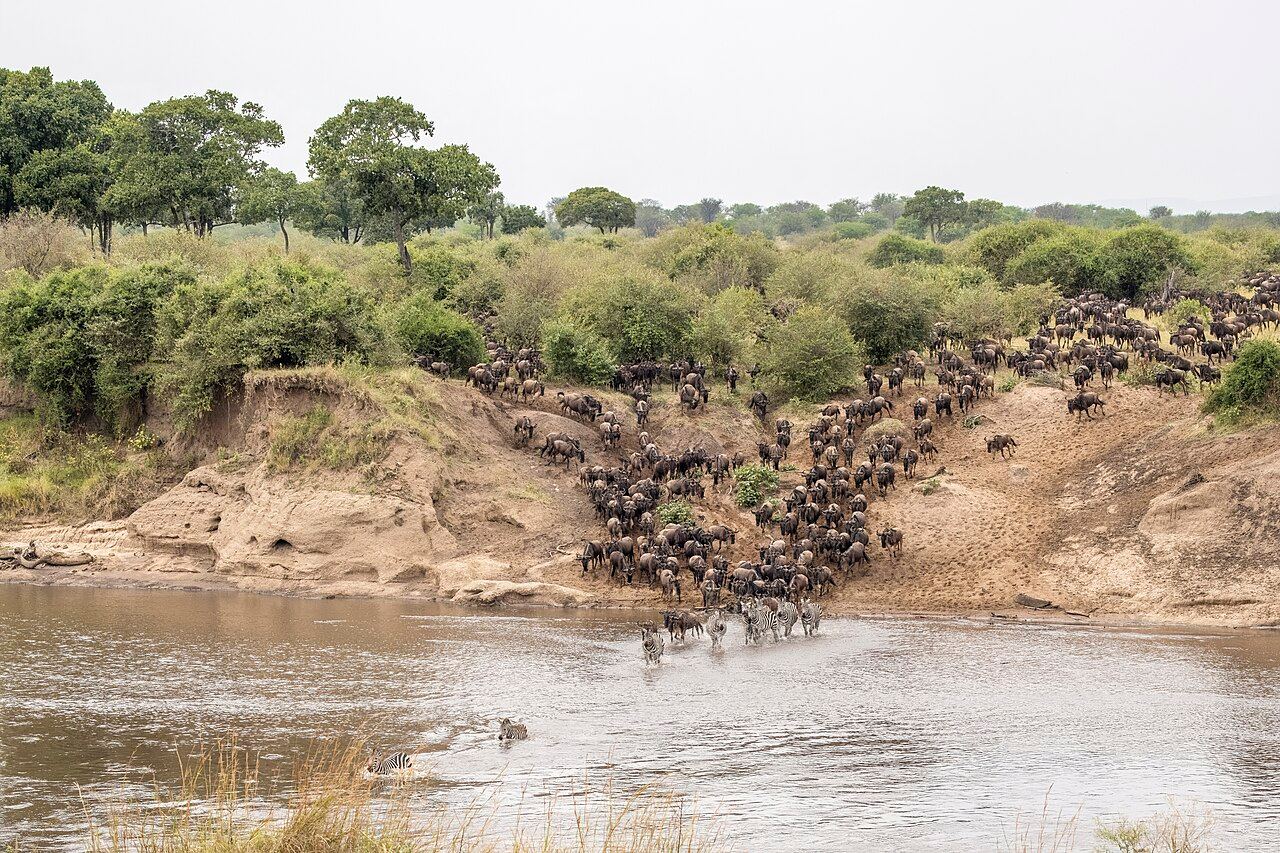
Photo: Charles J. Sharp, CC BY-SA 4.0 Blue wildebeest
LC · Least ConcernConnochaetes taurinus
Photo chance on Karin’s trip99 %very likely · Travel dates right in the middle of the calving season
Where: The calving herds move across the plains of Ndutu and the southern Serengeti.
Every year around 1.3 million wildebeest move in a great circle through the Serengeti Mara ecosystem. In February, hundreds of thousands of calves are born in the southern Serengeti within just a few weeks.
-

Plains zebra
NT · Near ThreatenedEquus quagga
Photo chance on Karin’s trip99 %very likely · With the wildebeest on the calving plains
Where: Large herds together with the wildebeest in Ndutu and the Serengeti.
Every plains zebra has its own stripe pattern. In the Serengeti, zebras migrate together with the wildebeest.
-
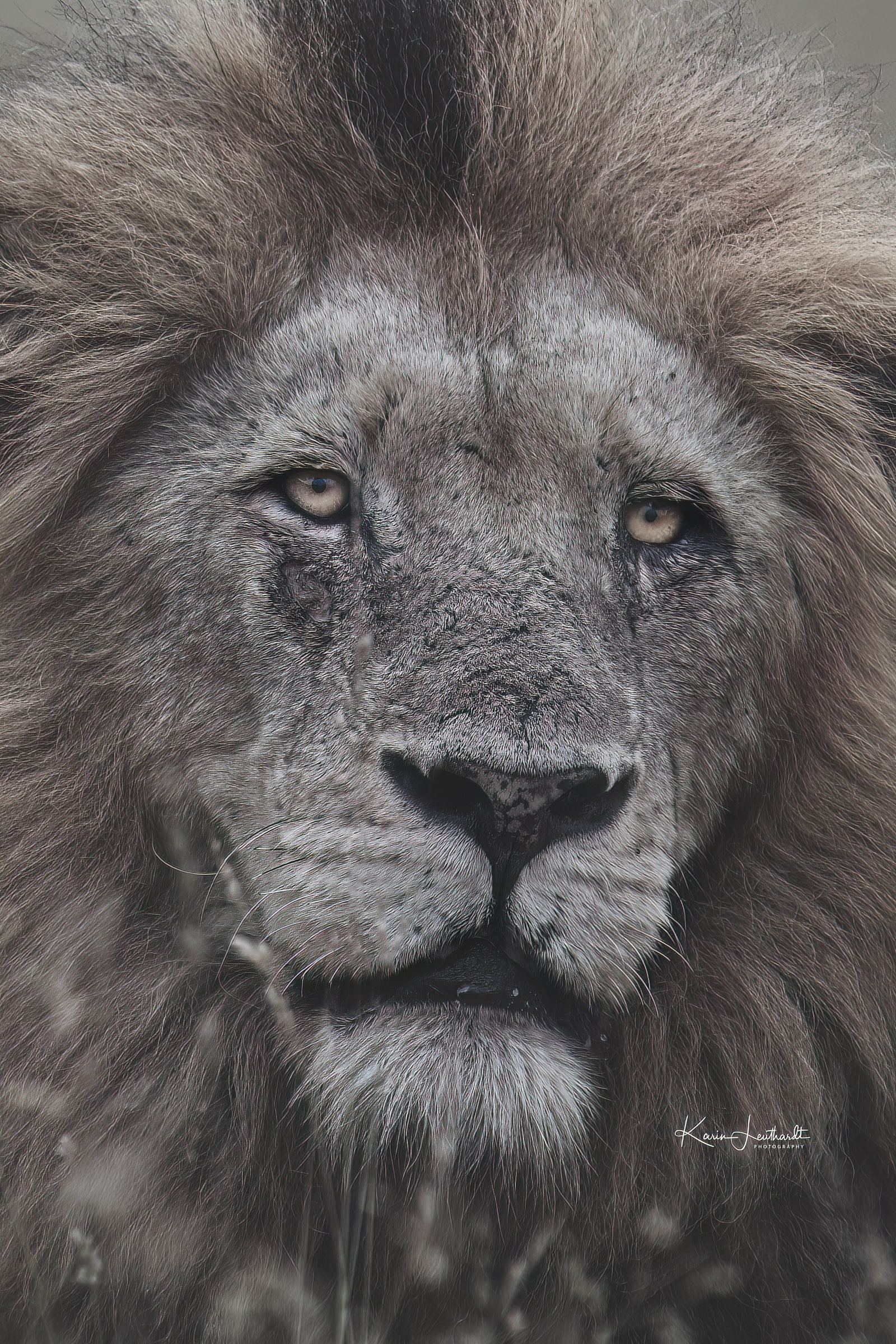
Lion
VU · VulnerablePanthera leo
Photo chance on Karin’s trip98 %very likely · High lion density in Ndutu and the Serengeti, 7 days of game drives
Where: Seen daily in Ndutu and the Serengeti, often near the calving herds.
Lions are the only cats that live in prides. Estimates suggest only around 20,000 to 25,000 remain in Africa.
-
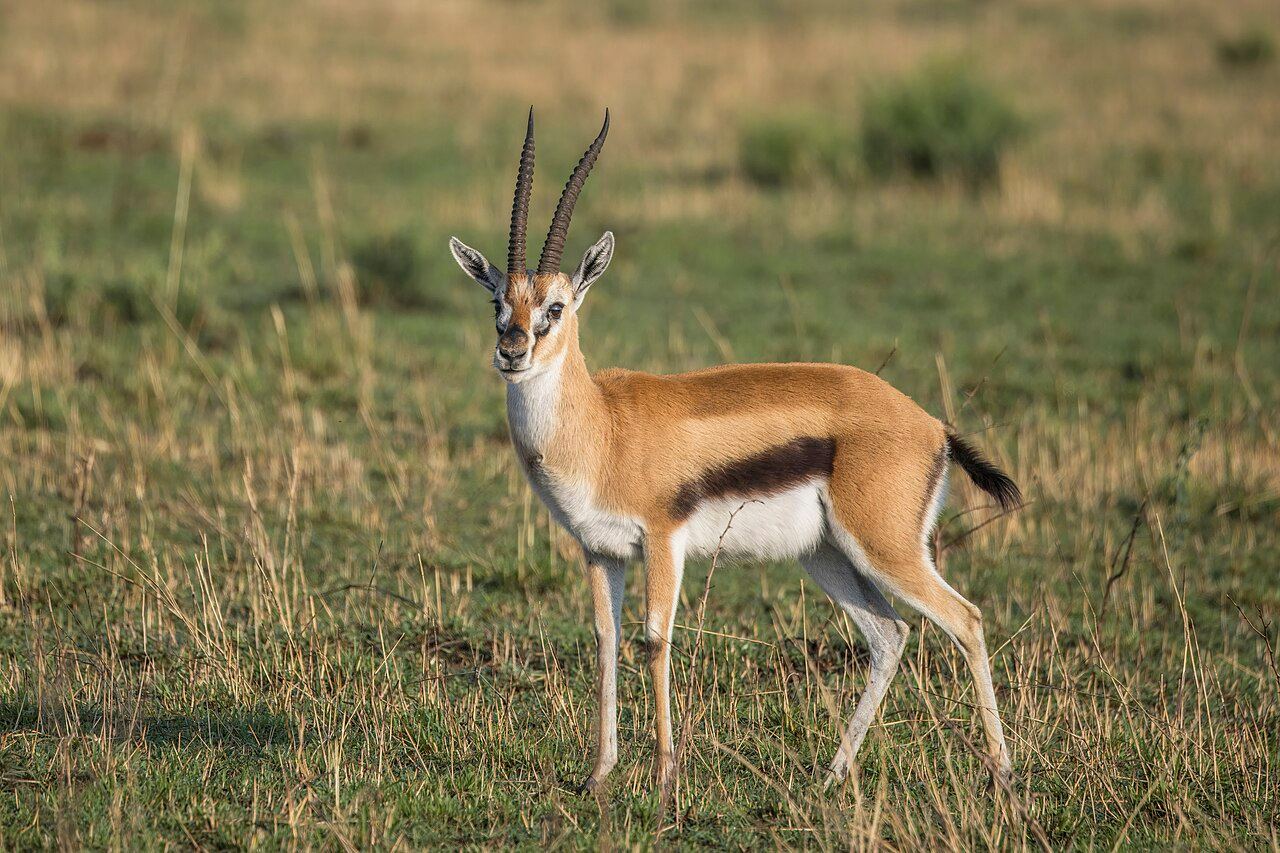
Photo: Charles J. Sharp, CC BY-SA 4.0 Thomson's gazelle
LC · Least ConcernEudorcas thomsonii
Photo chance on Karin’s trip98 %very likely · Very common on the short-grass plains
Where: On the short-grass plains of Ndutu and the Serengeti.
Thomson’s gazelle is recognisable by the black stripe along its flank. It is one of the cheetah’s most important prey species.
-
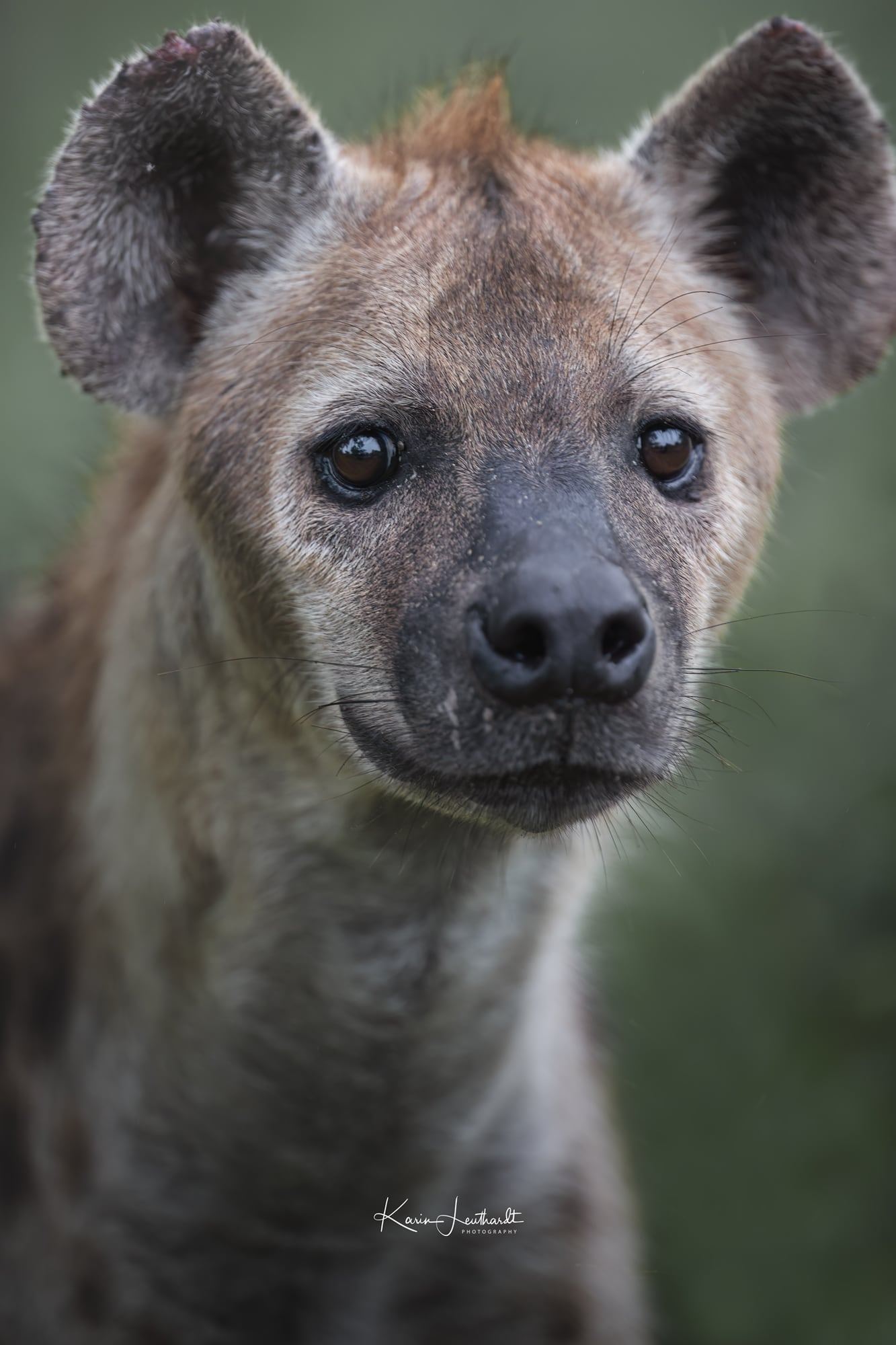
Spotted hyena
LC · Least ConcernCrocuta crocuta
Photo chance on Karin’s trip97 %very likely · Very common during the calving season
Where: Everywhere among the wildebeest herds in Ndutu and the Serengeti.
Spotted hyenas live in clans led by females. They catch most of their food themselves and are by no means just scavengers.
-
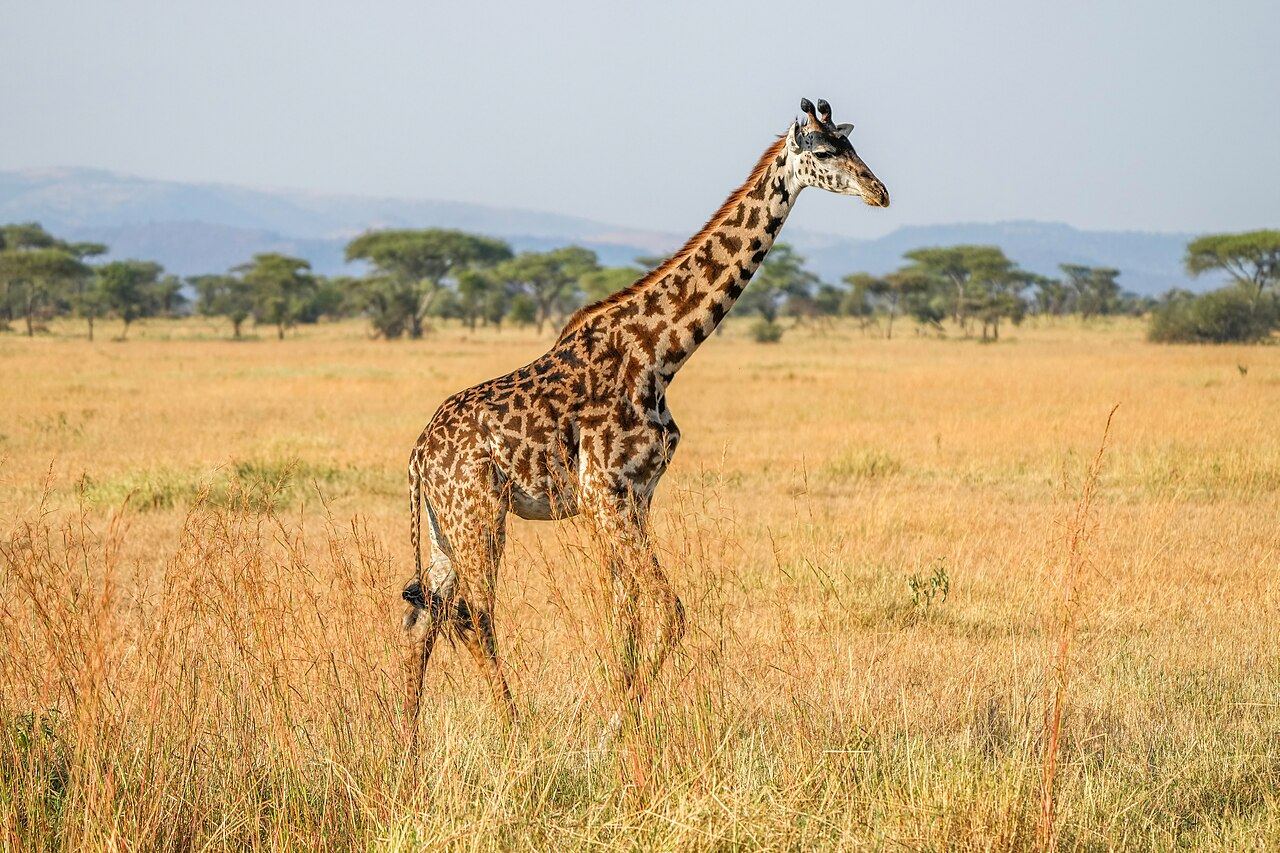
Photo: Giles Laurent, CC BY-SA 4.0 Masai giraffe
EN · EndangeredGiraffa tippelskirchi
Photo chance on Karin’s trip95 %very likely · Common in the woodlands of Ndutu
Where: In the acacia woodlands around Lake Ndutu and Lake Masek and in the Serengeti.
The Masai giraffe is recognisable by its jagged, vine-leaf-shaped patches. Since 2025 the IUCN has recognised four giraffe species, and the Masai giraffe is one of them.
-

Lilac-breasted roller
LC · Least ConcernCoracias caudata
Photo chance on Karin’s trip90 %very likely · Common savannah bird
Where: Along the tracks and in acacias in Ndutu and the Serengeti.
The lilac-breasted roller shows bright blue wings in flight. It often perches in the open on branches, which makes it a popular subject for photographers.
-
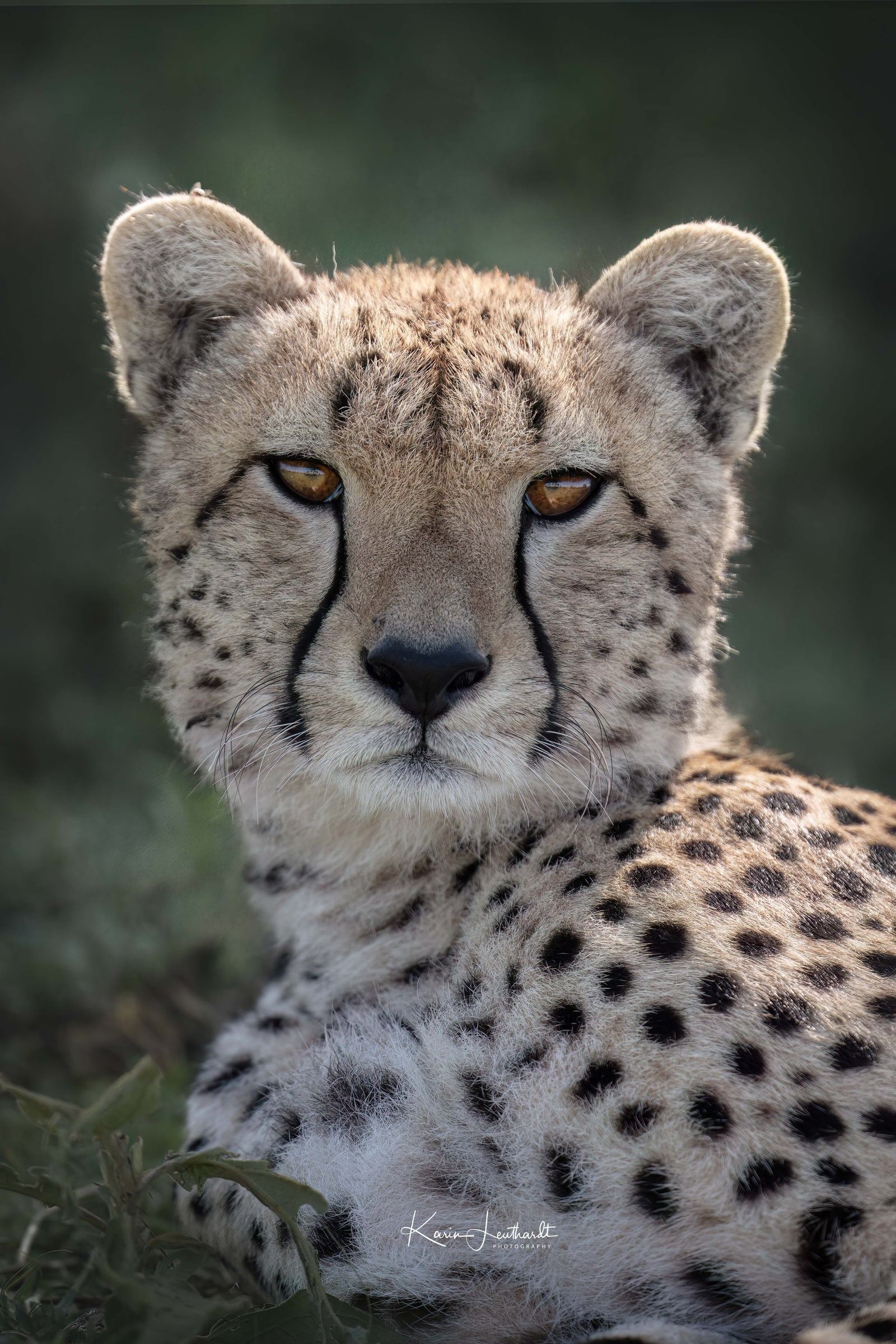
Cheetah
VU · VulnerableAcinonyx jubatus
Photo chance on Karin’s trip88 %very likely · Ndutu is considered a cheetah hotspot during the calving season
Where: On the open short-grass plains of Ndutu and the southern Serengeti.
In a sprint the cheetah reaches over 100 km/h, and it hunts mostly by day. Only around 7,000 adults remain across Africa.
-
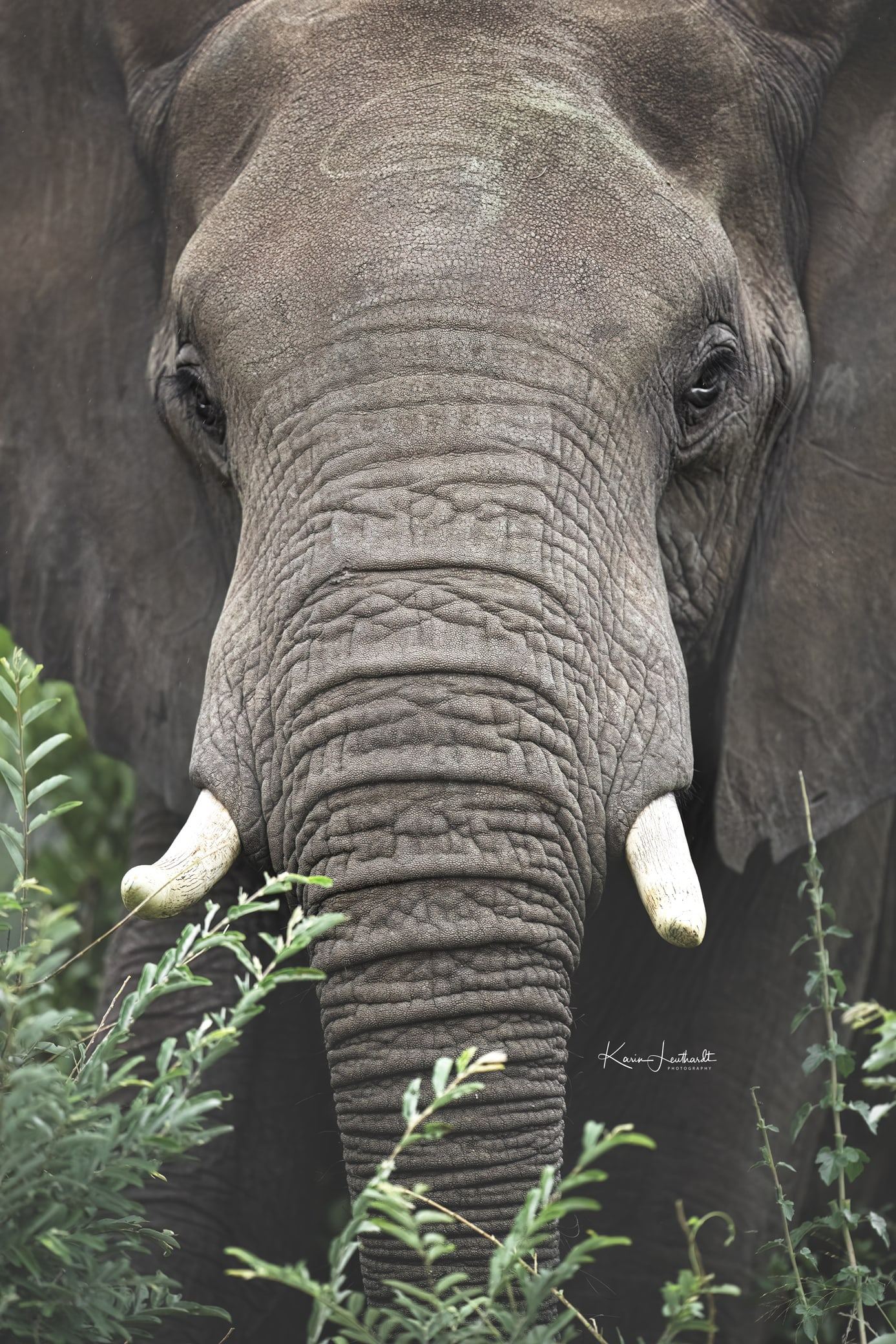
African savanna elephant
EN · EndangeredLoxodonta africana
Photo chance on Karin’s trip80 %very likely · Few elephants in Ndutu, better in the Serengeti and on the transfer
Where: Occasionally near Ndutu, more often in the central Serengeti and on the drive through the Ngorongoro Highlands.
The African savanna elephant is the largest living land animal. Since 2021 the IUCN has assessed the savanna elephant and the forest elephant as separate species.
-
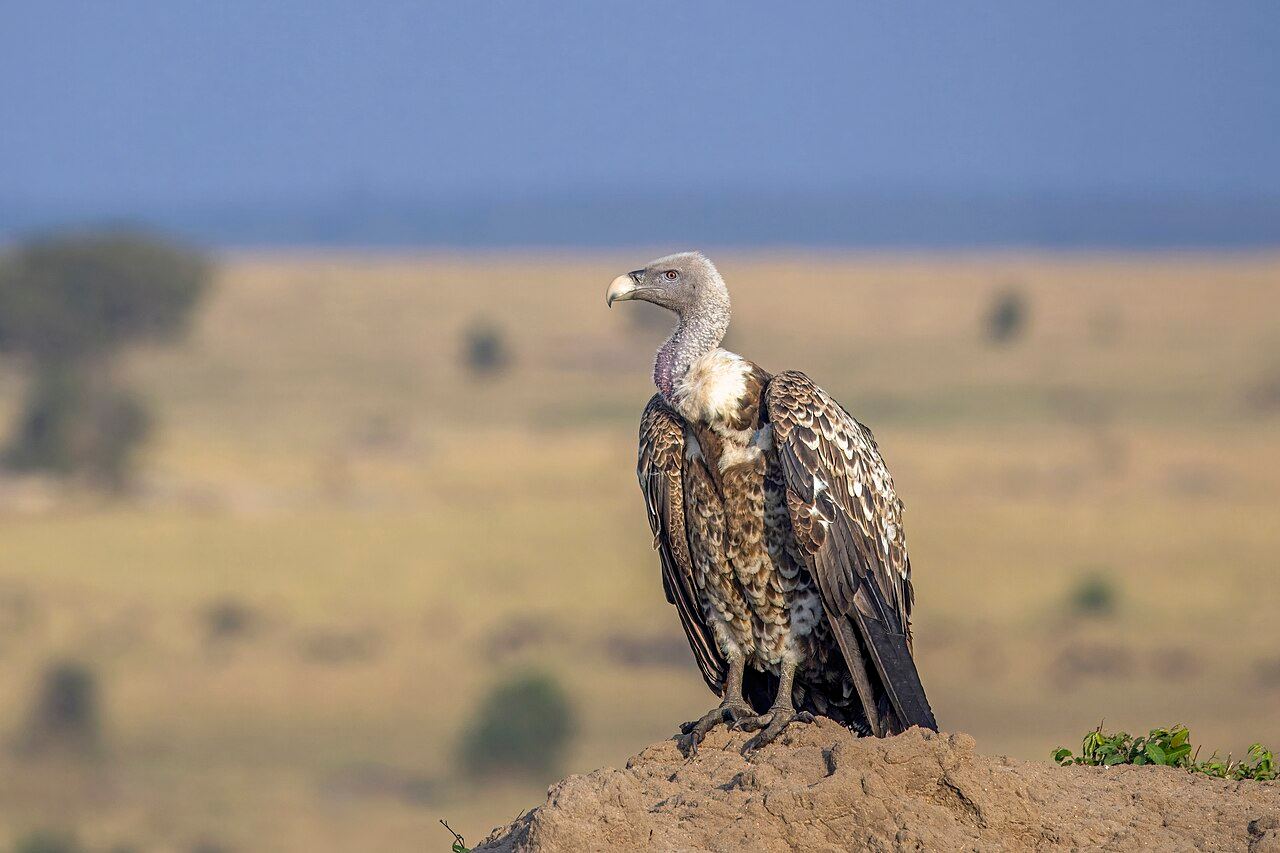
Photo: Charles J. Sharp, CC BY-SA 4.0 Rüppell's vulture
CR · Critically EndangeredGyps rueppelli
Photo chance on Karin’s trip80 %very likely · Many carcasses and vultures during the calving season
Where: At kills on the calving plains of Ndutu and the Serengeti.
Rüppell’s vulture is one of the highest-flying birds in the world. Like Africa’s other vultures, it suffers above all from poisoning.
-

African buffalo
NT · Near ThreatenedSyncerus caffer
Photo chance on Karin’s trip75 %quite likely · Rare in Ndutu, regular in the Serengeti
Where: Mainly in the central Serengeti along rivers and swamps.
African buffalo live in herds that can number several hundred animals. They are one of the Big Five and can even defend themselves against lions.
-
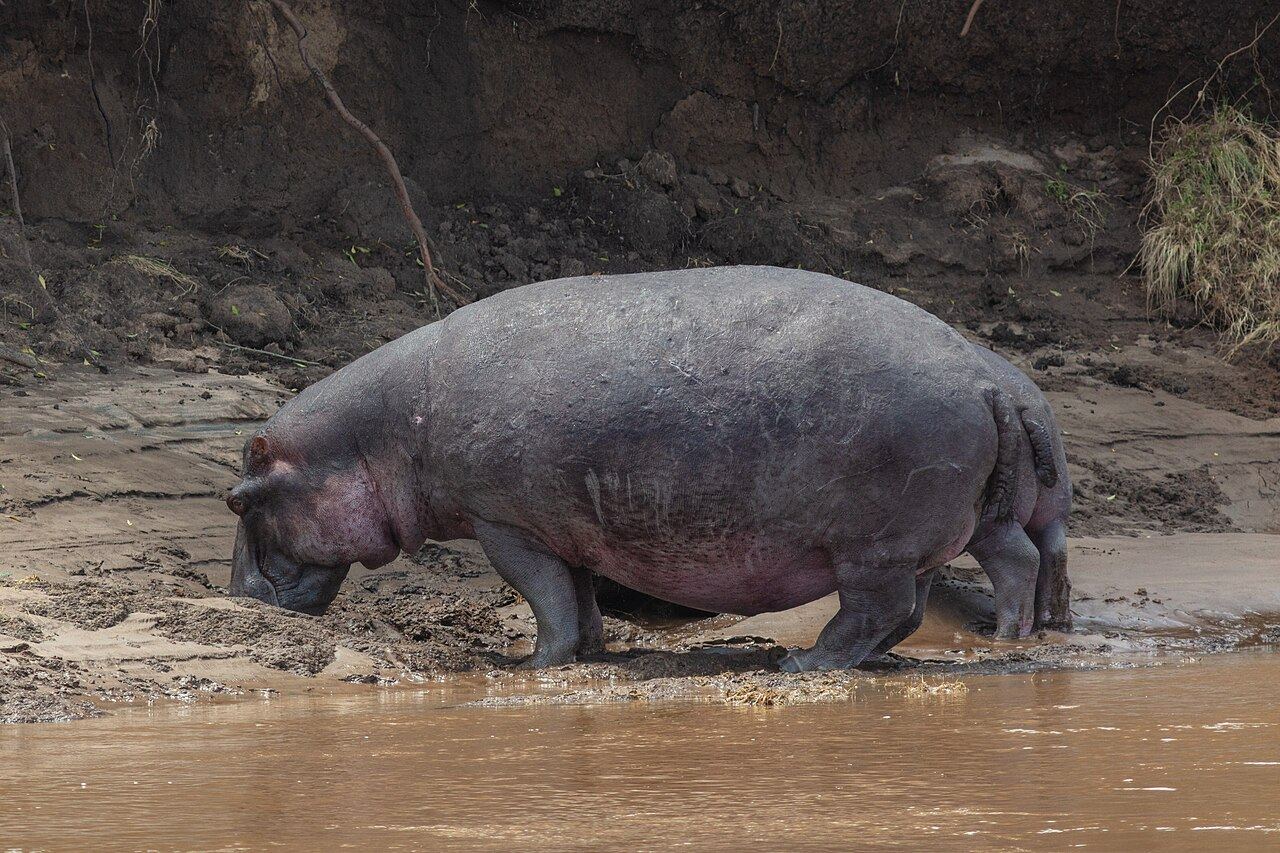
Photo: Diego Delso, CC BY-SA 4.0 Hippopotamus
VU · VulnerableHippopotamus amphibius
Photo chance on Karin’s trip70 %quite likely · Depends on where the camp is located in the Serengeti
Where: In the rivers and hippo pools of the Serengeti.
Hippos spend the day in the water and come ashore at night to graze. Bulls often weigh well over a tonne.
-
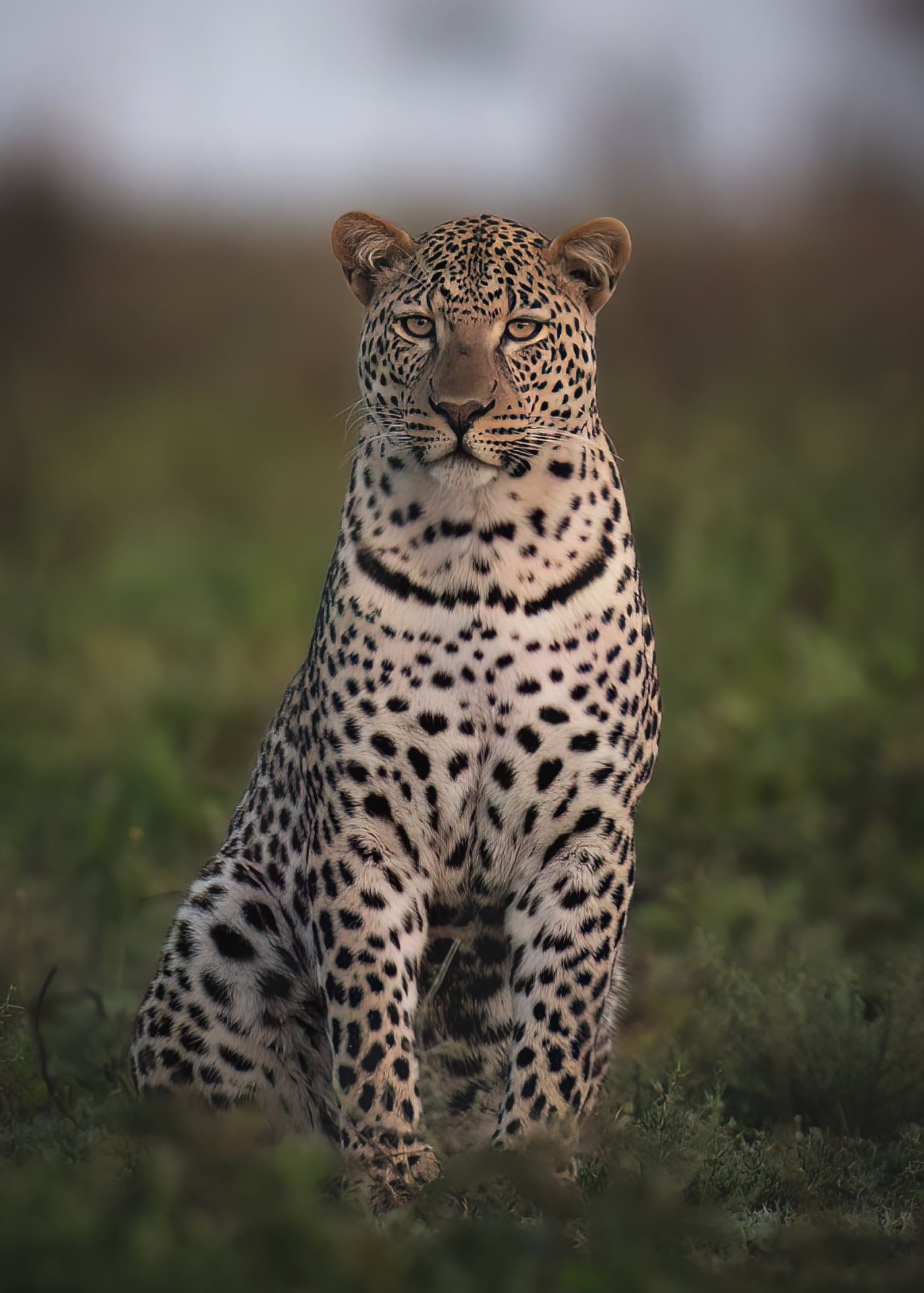
Leopard
VU · VulnerablePanthera pardus
Photo chance on Karin’s trip65 %quite likely · Regular but not daily; Seronera is best
Where: In the acacia woodlands around Ndutu and along the rivers of the Serengeti.
Leopards usually hunt alone at dusk and at night. They often drag larger prey up into trees to keep it safe from lions and hyenas.
-
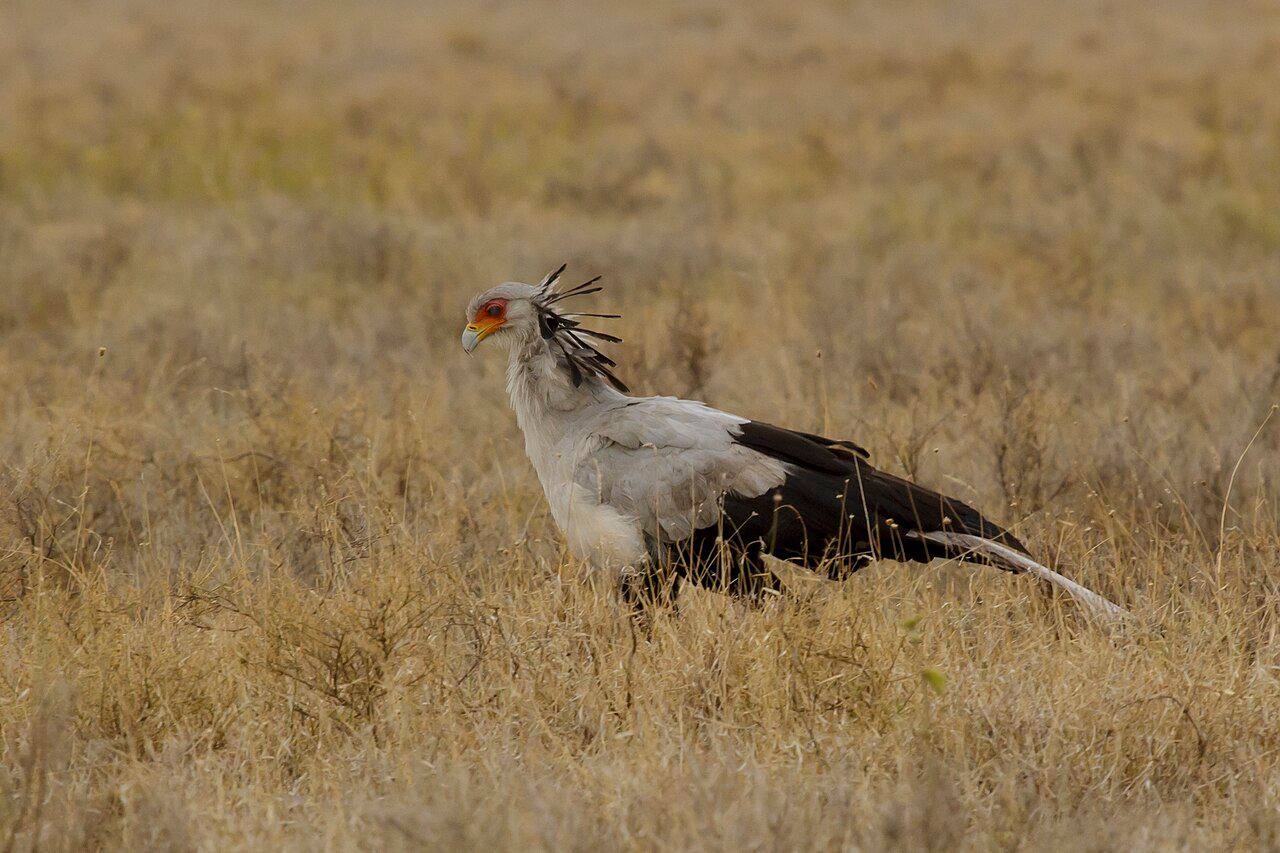
Photo: Thomas Fuhrmann, CC BY-SA 4.0 Secretarybird
EN · EndangeredSagittarius serpentarius
Photo chance on Karin’s trip60 %quite likely · Regular in open grassland
Where: On the open grass plains of Ndutu and the Serengeti.
The secretarybird is a bird of prey that hunts on foot. It kills snakes and rodents with powerful kicks.
-
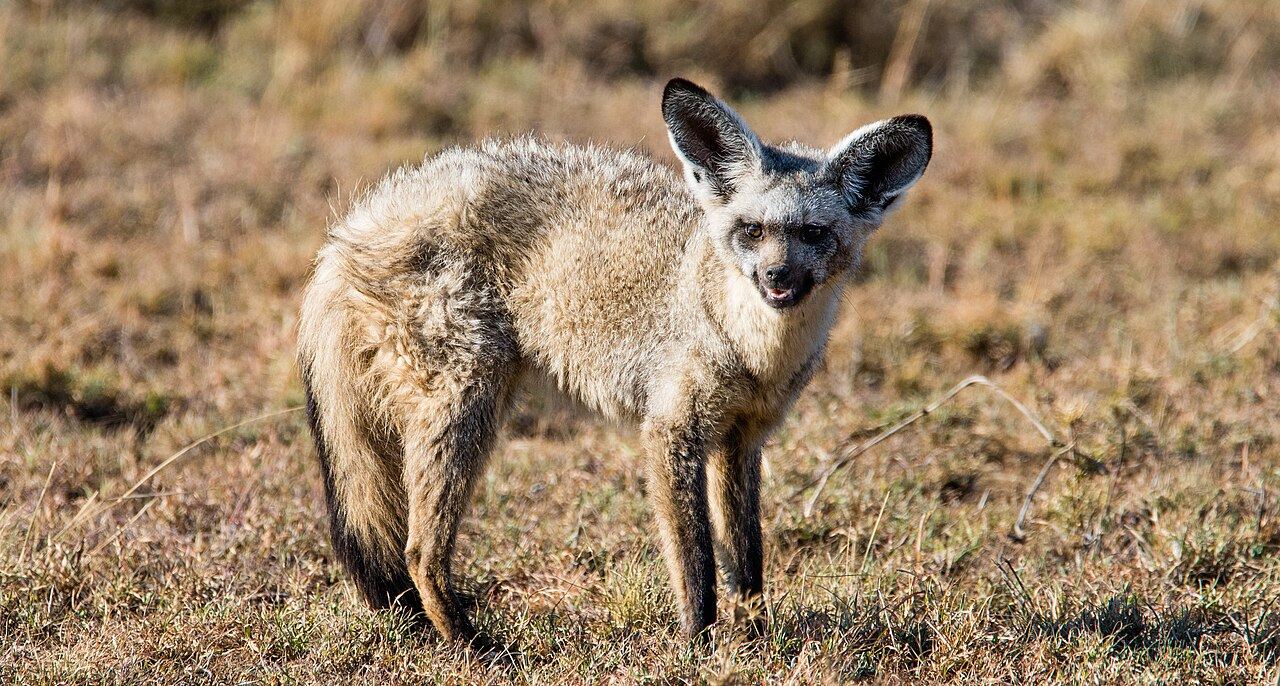
Photo: Christoph Strässler from Oberdorf BL, Schweiz, CC BY-SA 2.0 Bat-eared fox
LC · Least ConcernOtocyon megalotis
Photo chance on Karin’s trip55 %quite likely · Well represented in Ndutu, often resting during the day
Where: On the short-grass plains of Ndutu, often near their dens.
The bat-eared fox feeds mainly on termites and beetles. With its large ears it can hear insects underground.
-
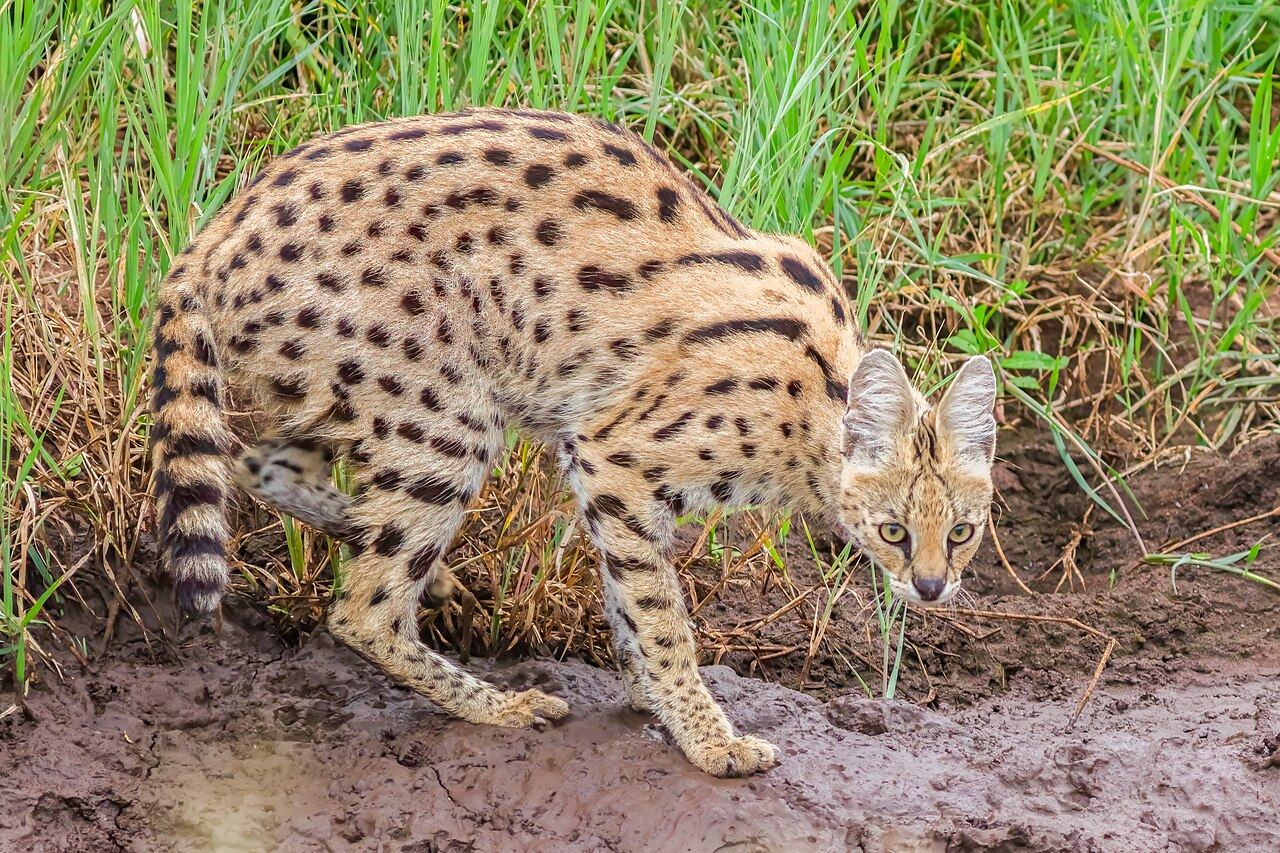
Photo: Diego Delso, CC BY-SA 4.0 Serval
LC · Least ConcernLeptailurus serval
Photo chance on Karin’s trip40 %with luck · Occasional sightings, mostly early and late in the day
Where: In tall grass and along swamp edges in Ndutu and the Serengeti.
Relative to its body, the serval has the longest legs of any cat. Its large ears help it locate rodents in tall grass.
-

Photo: Diego Delso, CC BY-SA 4.0 Black rhinoceros
CR · Critically EndangeredDiceros bicornis
Photo chance on Karin’s trip5 %with a lot of luck · Very small, shy population, not in the Ngorongoro Crater
Where: A few animals in the Moru Kopjes area of the Serengeti.
The black rhino uses its flexible upper lip to feed on leaves and twigs. After massive poaching, its population has grown back to around 6,000 animals.
-
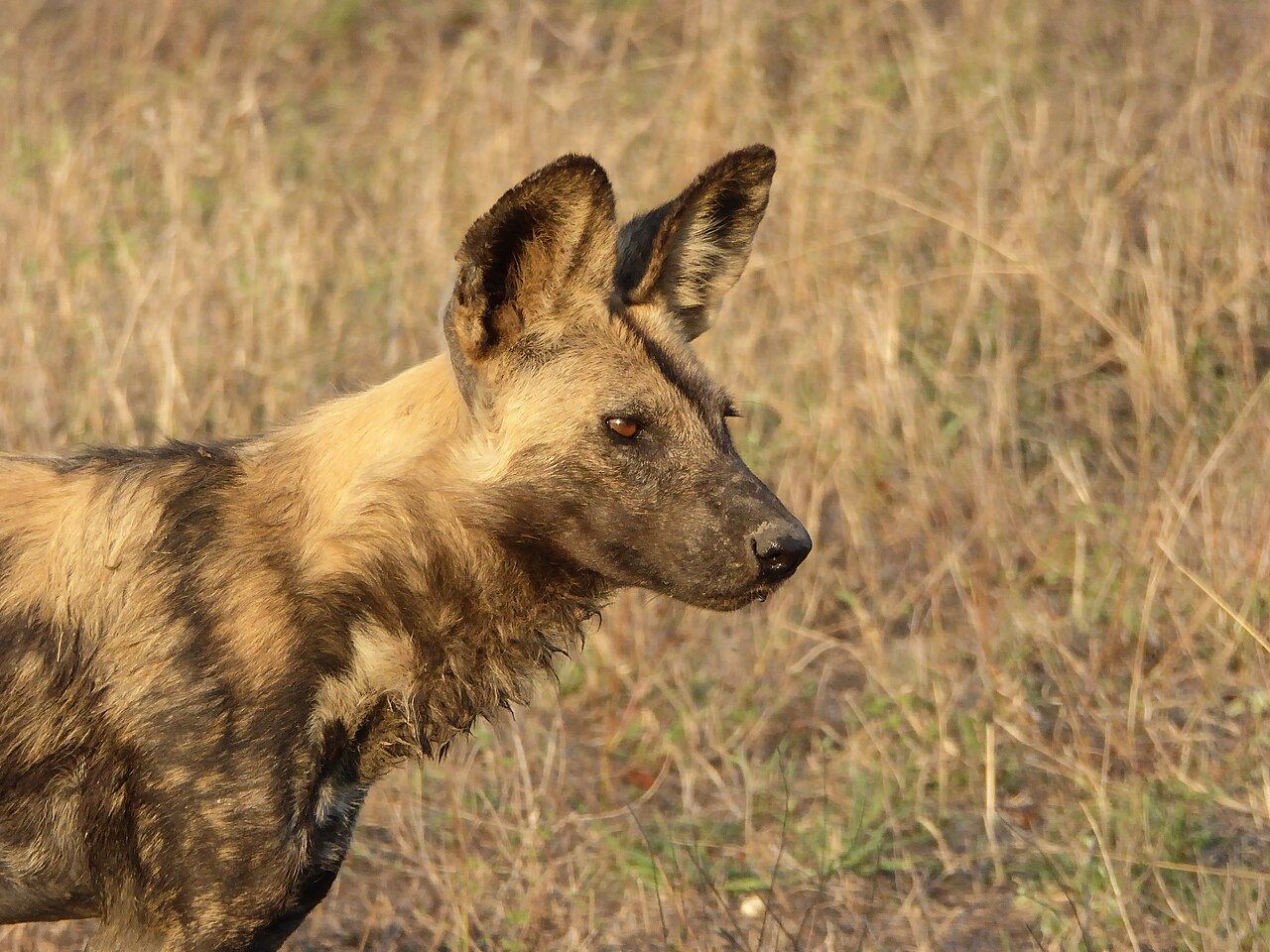
Photo: Regina Hart from Industry, United States, CC BY 2.0 African wild dog
EN · EndangeredLycaon pictus
Photo chance on Karin’s trip3 %with a lot of luck · Only isolated sighting reports
Where: Rare packs occasionally pass through Ndutu and the southern Serengeti.
African wild dogs hunt in packs and are highly successful at it. Only around 6,600 remain across Africa, about 1,400 of them adults.
Threatened animals in Tanzania
Status according to the IUCN Red List
- CR Rüppell's vulture Critically Endangered
- CR Black rhinoceros Critically Endangered
- EN Masai giraffe Endangered
- EN African savanna elephant Endangered
- EN Secretarybird Endangered
- EN African wild dog Endangered
- VU Lion Vulnerable
- VU Cheetah Vulnerable
- VU Hippopotamus Vulnerable
- VU Leopard Vulnerable
Frequently asked questions
Which animals can you see in Tanzania?
On Karin’s trip through Tanzania, the best photo chances are Blue wildebeest, Plains zebra, Lion, Thomson's gazelle, Spotted hyena and Masai giraffe. This page presents 18 species with their estimated photo chance.
Which animals are threatened in Tanzania?
According to the IUCN Red List, the threatened species in Tanzania include Rüppell's vulture (Critically Endangered), Black rhinoceros (Critically Endangered), Masai giraffe (Endangered), African savanna elephant (Endangered), Secretarybird (Endangered), African wild dog (Endangered), Lion (Vulnerable), Cheetah (Vulnerable), Hippopotamus (Vulnerable) and Leopard (Vulnerable).
Lion: how good is the photo chance in Tanzania?
On Karin’s trip the chance is estimated at about 98% (High lion density in Ndutu and the Serengeti, 7 days of game drives). Seen daily in Ndutu and the Serengeti, often near the calving herds.
Other countries
The photo chance is an estimate for Karin’s route and travel season, based on published sighting information from parks and safari operators. Wild animals keep to no schedule, so there is no guarantee. Conservation status follows the IUCN Red List.
Tanzania photo trip, 28 Feb to 7 Mar 2027 · View the trip →