
Wildlife in Uganda
Uganda lies where the East African savannah meets the Central African rainforest and, with more than 1,000 recorded bird species, has one of the richest bird faunas in Africa. Bwindi Impenetrable National Park is home to around half of all mountain gorillas, and Kibale Forest to one of the largest chimpanzee populations in East Africa.
- 16 species
- 9 threatened
- Uganda trip, Sep 2027 and Feb 2028 →
Wildlife in Uganda
-
Mountain gorilla
EN · EndangeredGorilla beringei beringei
Photo chance on Karin’s trip98 %very likely · Habituated groups, sighting success per trek close to 100%
Where: On two gorilla treks in Bwindi Impenetrable National Park.
Only around 1,060 mountain gorillas remain, and about half of them live in Bwindi Impenetrable National Park. Thanks to strict protection, the population has grown in recent decades.
-
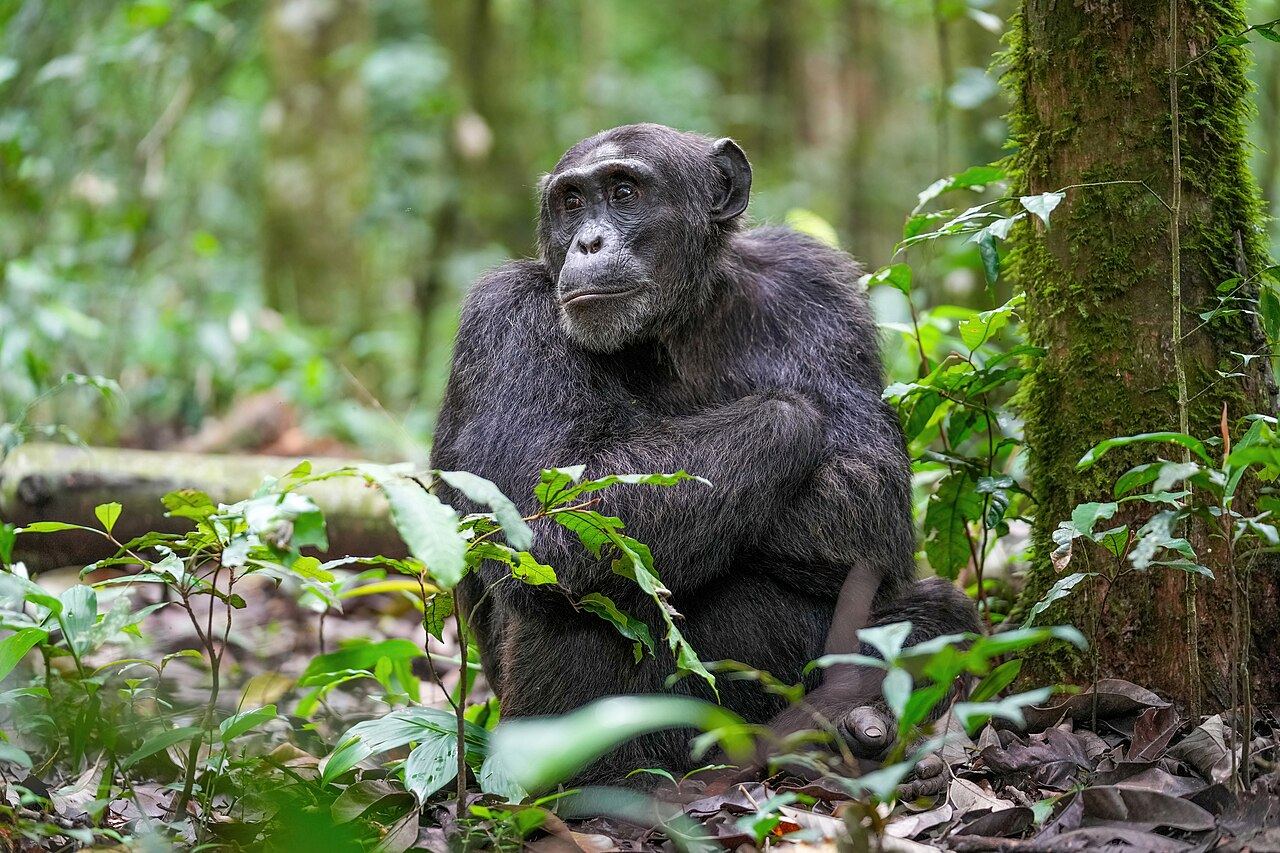
Photo: Giles Laurent, CC BY-SA 4.0 Chimpanzee
EN · EndangeredPan troglodytes
Photo chance on Karin’s trip90 %very likely · Kibale reports 90 to 95% sighting success, one trek
Where: On the chimpanzee trek in Kibale Forest.
With around 1,500 animals, Kibale Forest is home to one of the densest chimpanzee populations in Africa. The subspecies found in Uganda is the eastern chimpanzee.
-
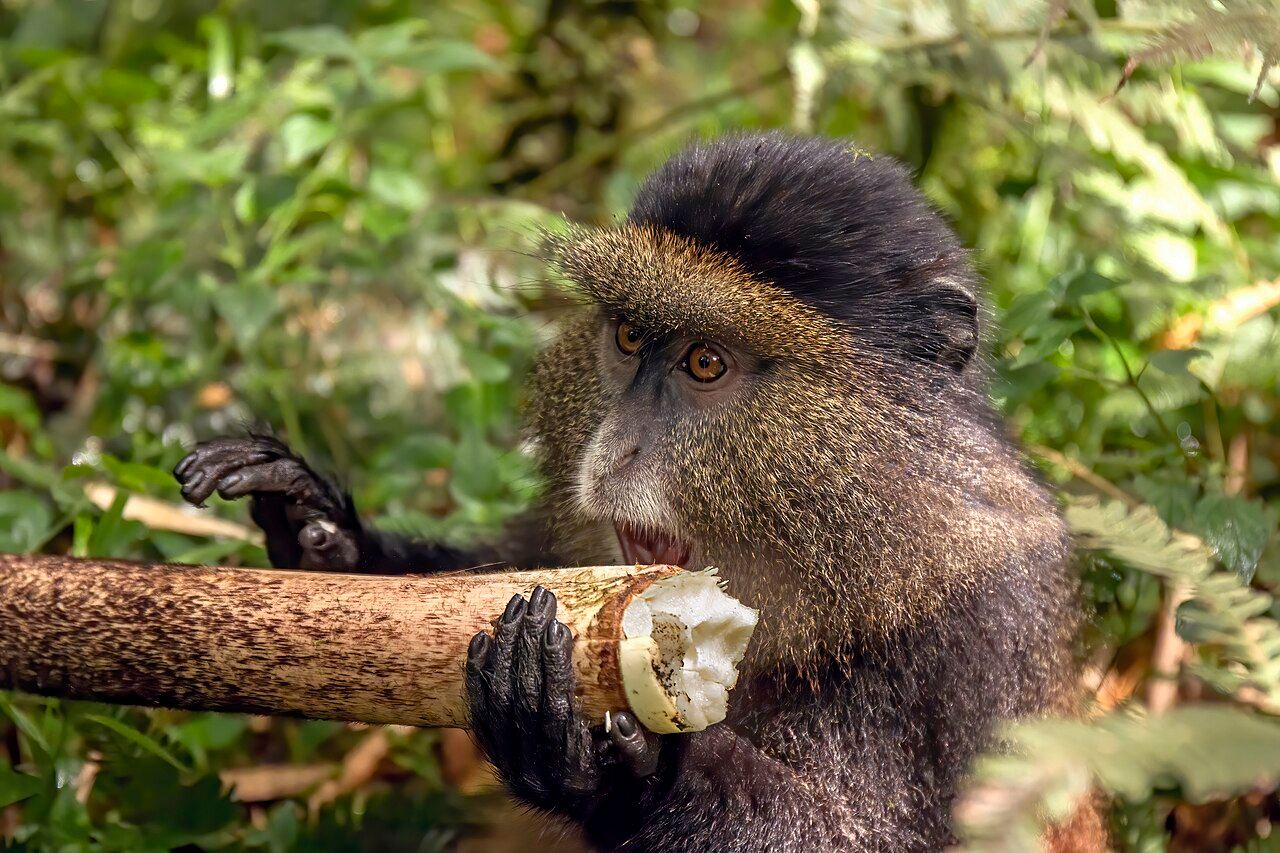
Photo: Charles J. Sharp, CC BY-SA 4.0 Golden monkey
EN · EndangeredCercopithecus kandti
Photo chance on Karin’s trip90 %very likely · Habituated group, high success rate
Where: On the golden monkey trek in the bamboo forests of Mgahinga Gorilla National Park.
Golden monkeys live only in the bamboo forests of the Virunga volcanoes and the neighbouring Gishwati Forest. They feed mainly on bamboo shoots and leaves.
-
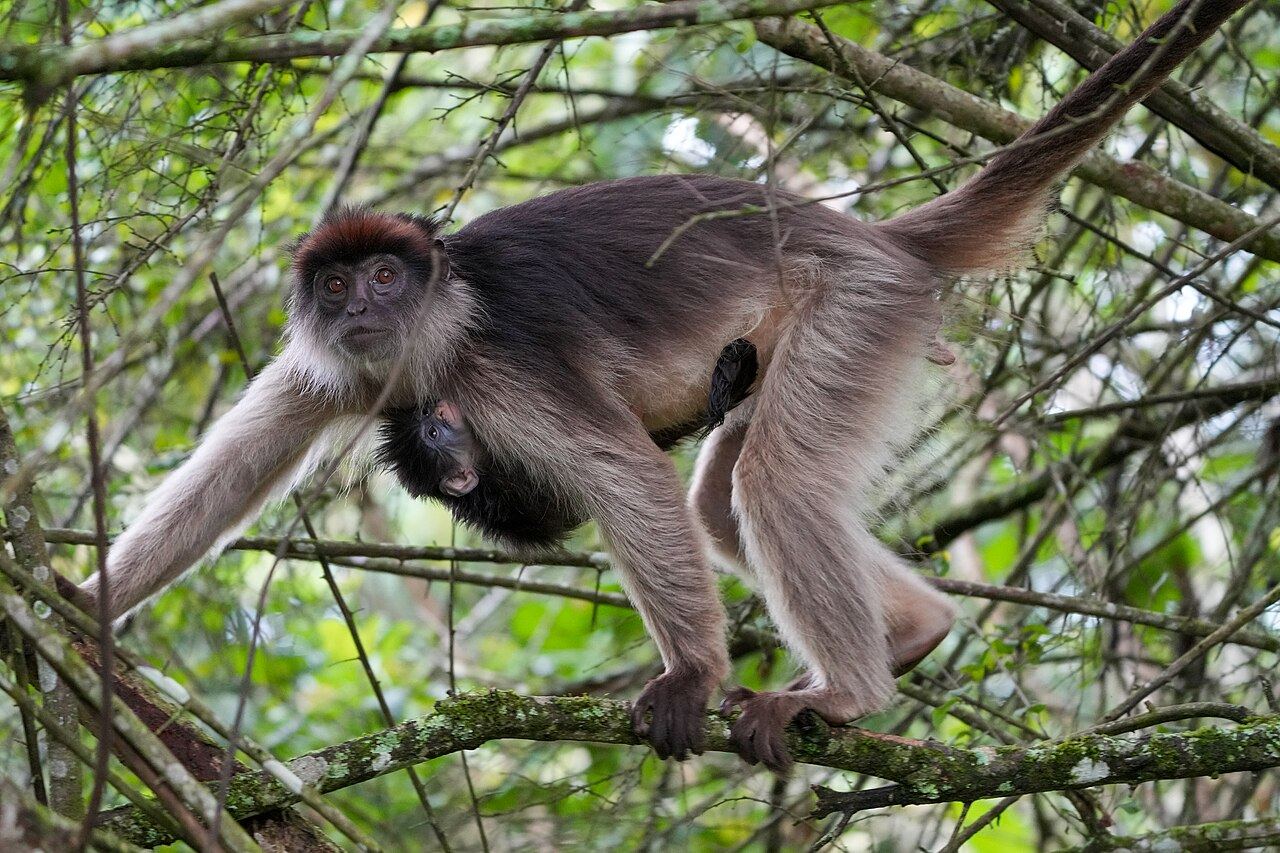
Photo: Giles Laurent, CC BY-SA 4.0 Ugandan red colobus
EN · EndangeredPiliocolobus tephrosceles
Photo chance on Karin’s trip85 %very likely · Common in Kibale, also on the chimpanzee trek
Where: In Kibale Forest and the Bigodi Wetland.
Kibale Forest is home to the largest population of this colobus monkey. It is a frequent prey of chimpanzees.
-

Photo: Diego Delso, CC BY-SA 4.0 Mantled guereza
LC · Least ConcernColobus guereza
Photo chance on Karin’s trip85 %very likely · Common and easy to see in the treetops
Where: In Kibale Forest, the Bigodi Wetland and on the edge of Bwindi.
The mantled guereza has a long white mantle of hair and a bushy white tail. It feeds mostly on leaves and has a multi-chambered stomach to digest them.
-
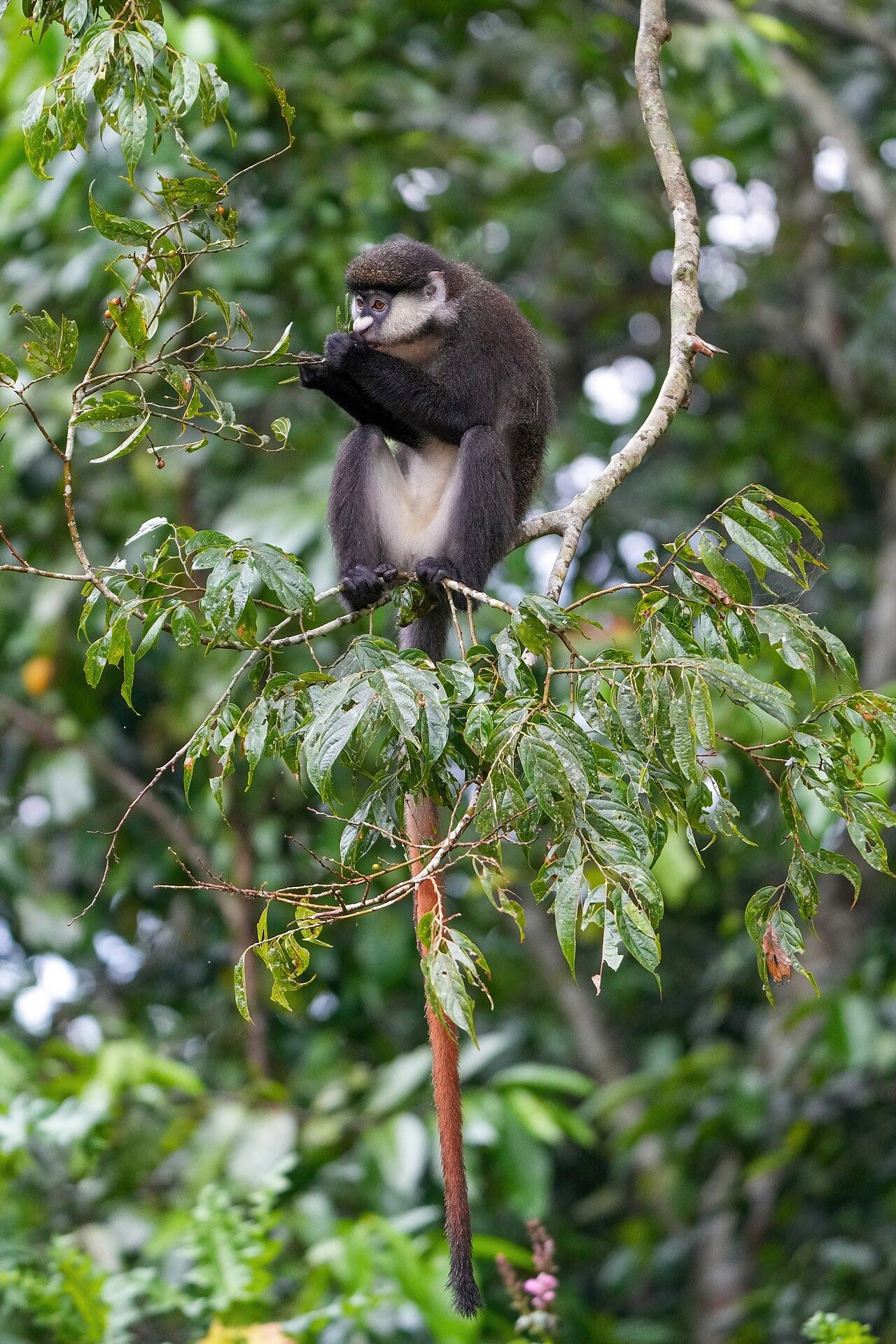
Photo: Giles Laurent, CC BY-SA 4.0 Red-tailed monkey
LC · Least ConcernCercopithecus ascanius
Photo chance on Karin’s trip85 %very likely · One of the most common species in Kibale
Where: In Kibale Forest and the Bigodi Wetland.
The red-tailed monkey has a white spot on its nose and a reddish-brown tail. It is one of the most common monkey species in Kibale Forest.
-
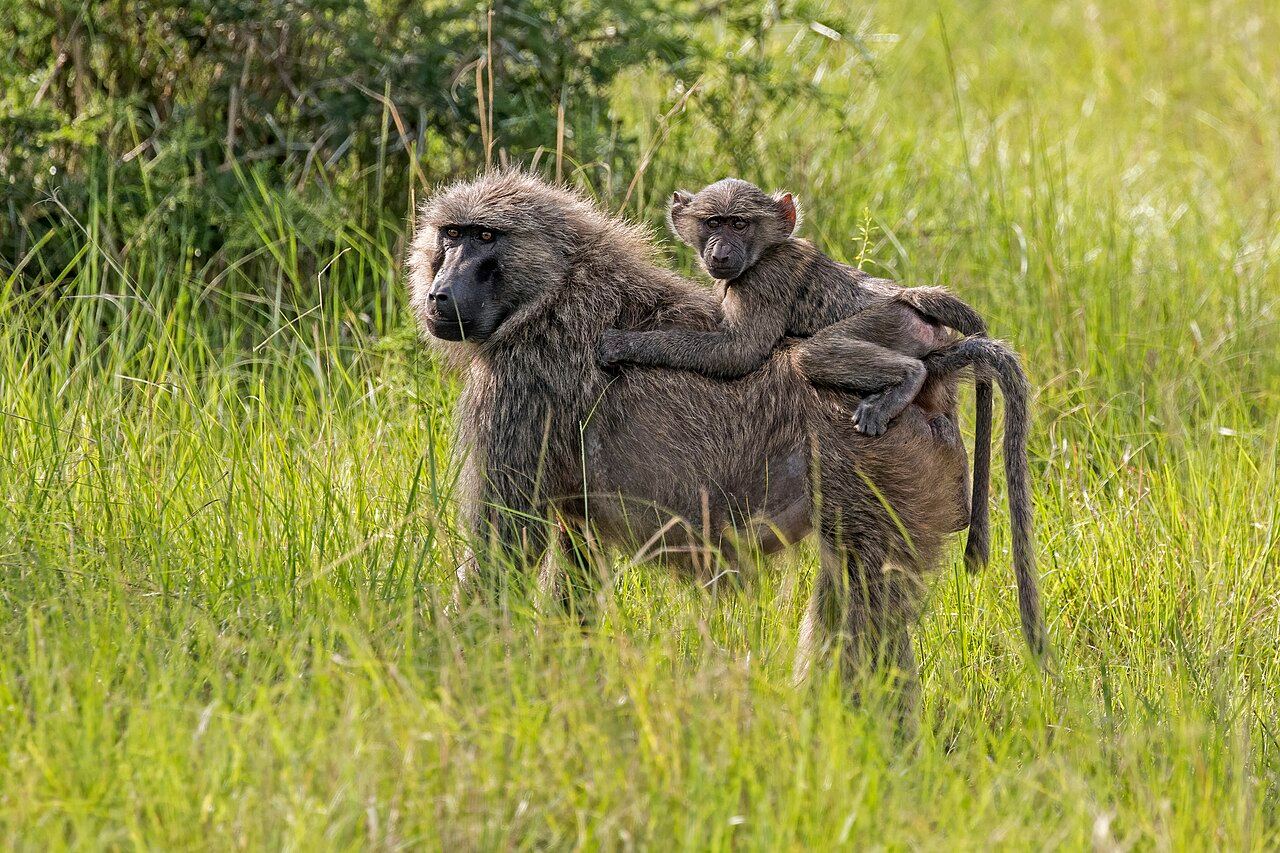
Photo: Charles J. Sharp, CC BY-SA 4.0 Olive baboon
LC · Least ConcernPapio anubis
Photo chance on Karin’s trip75 %quite likely · Common along the driving routes
Where: Seen along roads and forest edges, also in Kibale.
Olive baboons live in large groups with a clear hierarchy. In Uganda they are often seen along forest edges and roads.
-
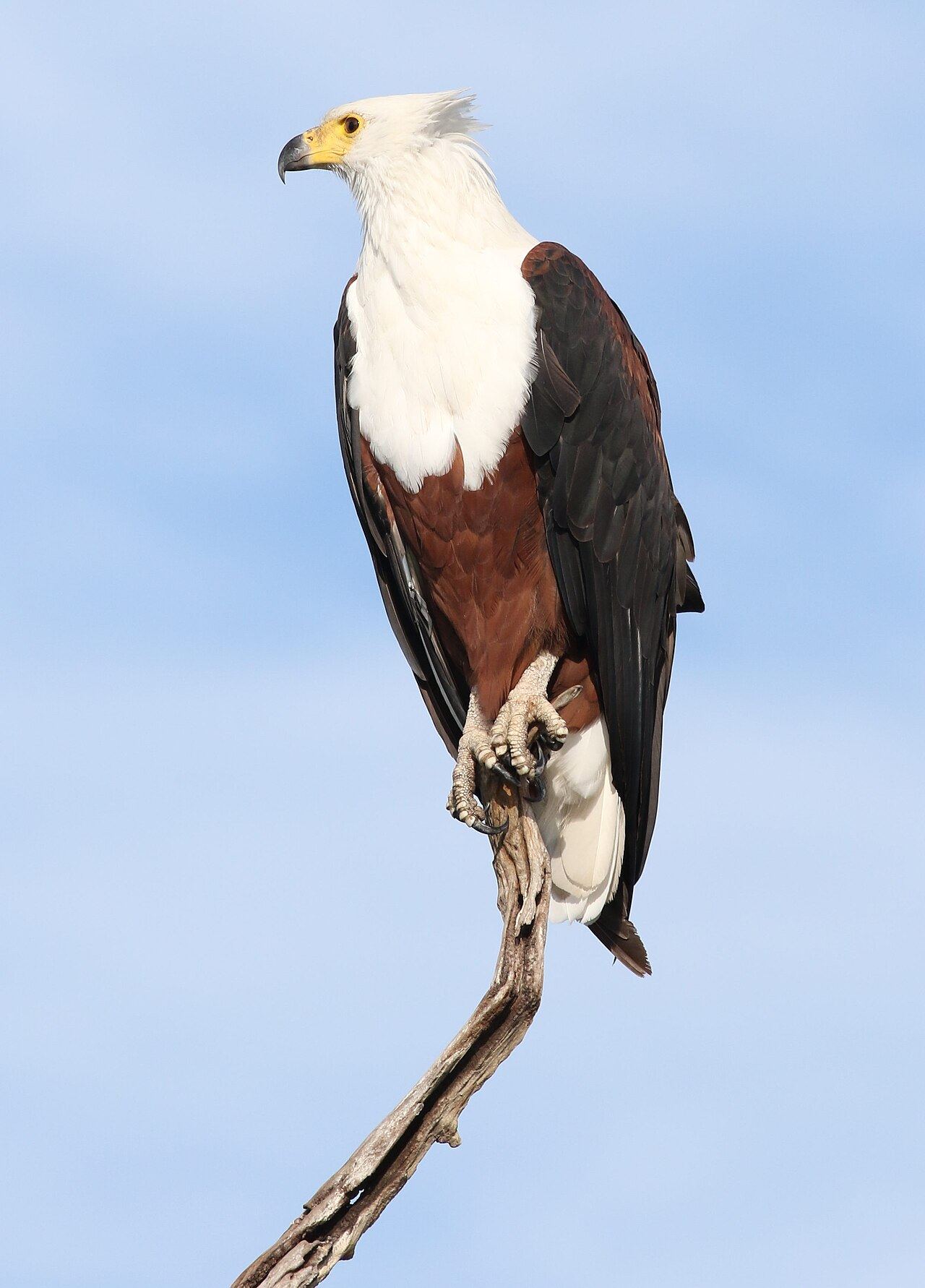
Photo: Derek Keats from Johannesburg, South Africa, CC BY 2.0 African fish eagle
LC · Least ConcernHaliaeetus vocifer
Photo chance on Karin’s trip75 %quite likely · Common on large bodies of water
Where: On Lake Victoria and in Mabamba Swamp.
The African fish eagle is found on lakes and rivers across much of Africa. Its loud call is considered the typical sound of African waters.
-
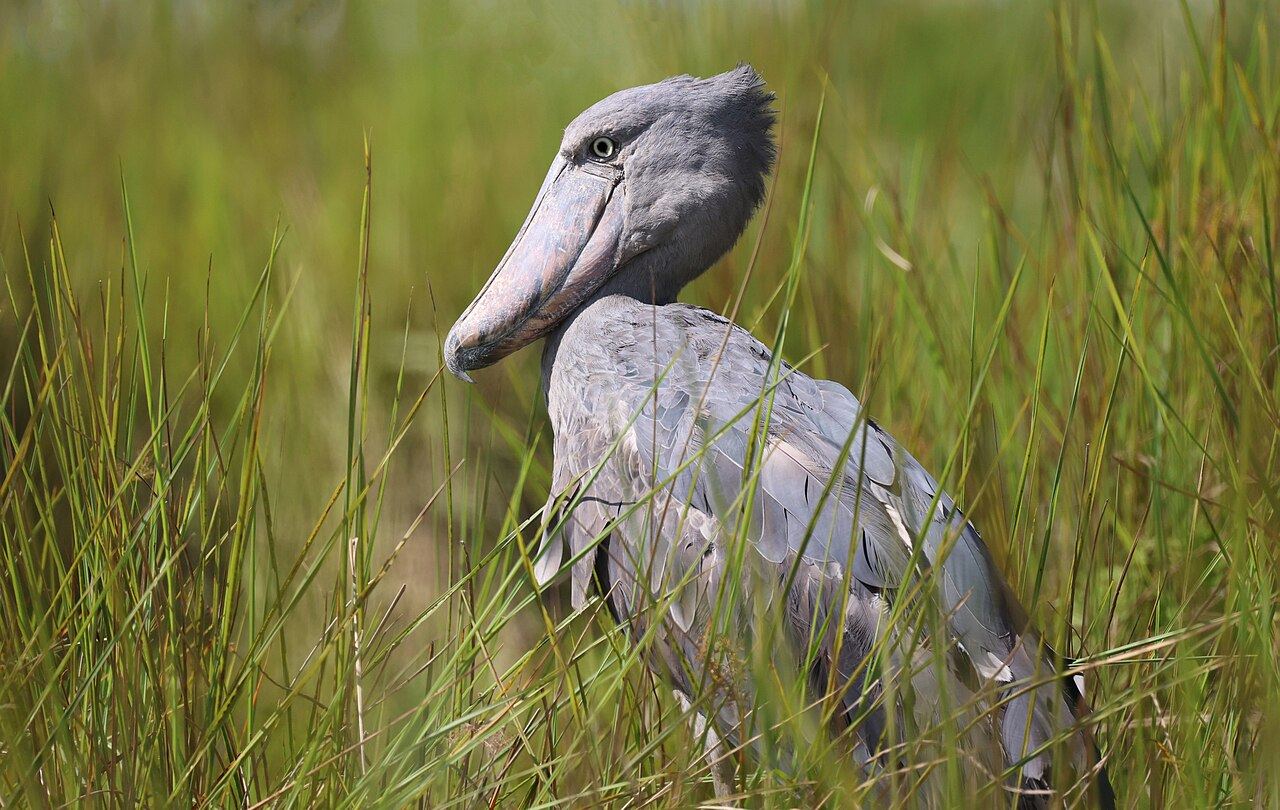
Photo: flowcomm, CC BY 2.0 Shoebill
VU · VulnerableBalaeniceps rex
Photo chance on Karin’s trip70 %quite likely · Operators cite 60 to 80%, only one outing
Where: On the boat trip through Mabamba Swamp on Lake Victoria.
The shoebill hunts mainly lungfish in papyrus swamps and can stand motionless for long periods while doing so. Only a few birds live in Mabamba Swamp.
-
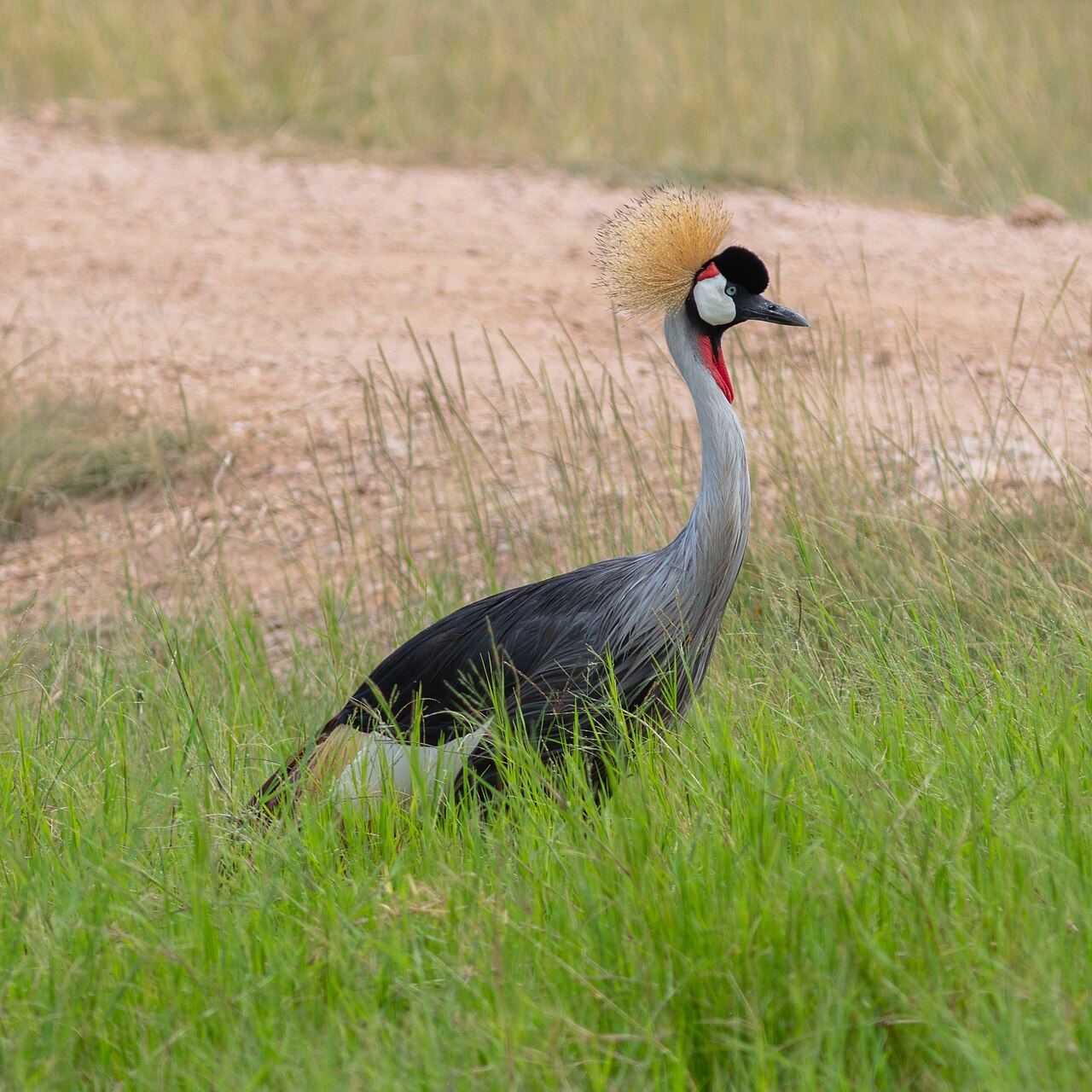
Photo: Diego Delso, CC BY-SA 4.0 Grey crowned crane
EN · EndangeredBalearica regulorum
Photo chance on Karin’s trip70 %quite likely · Common in swamps and fields
Where: In wetlands along the route, for example at Mabamba, Bigodi and in the southwest.
The grey crowned crane is Uganda’s national bird. The loss of wetlands has caused its population to decline sharply.
-
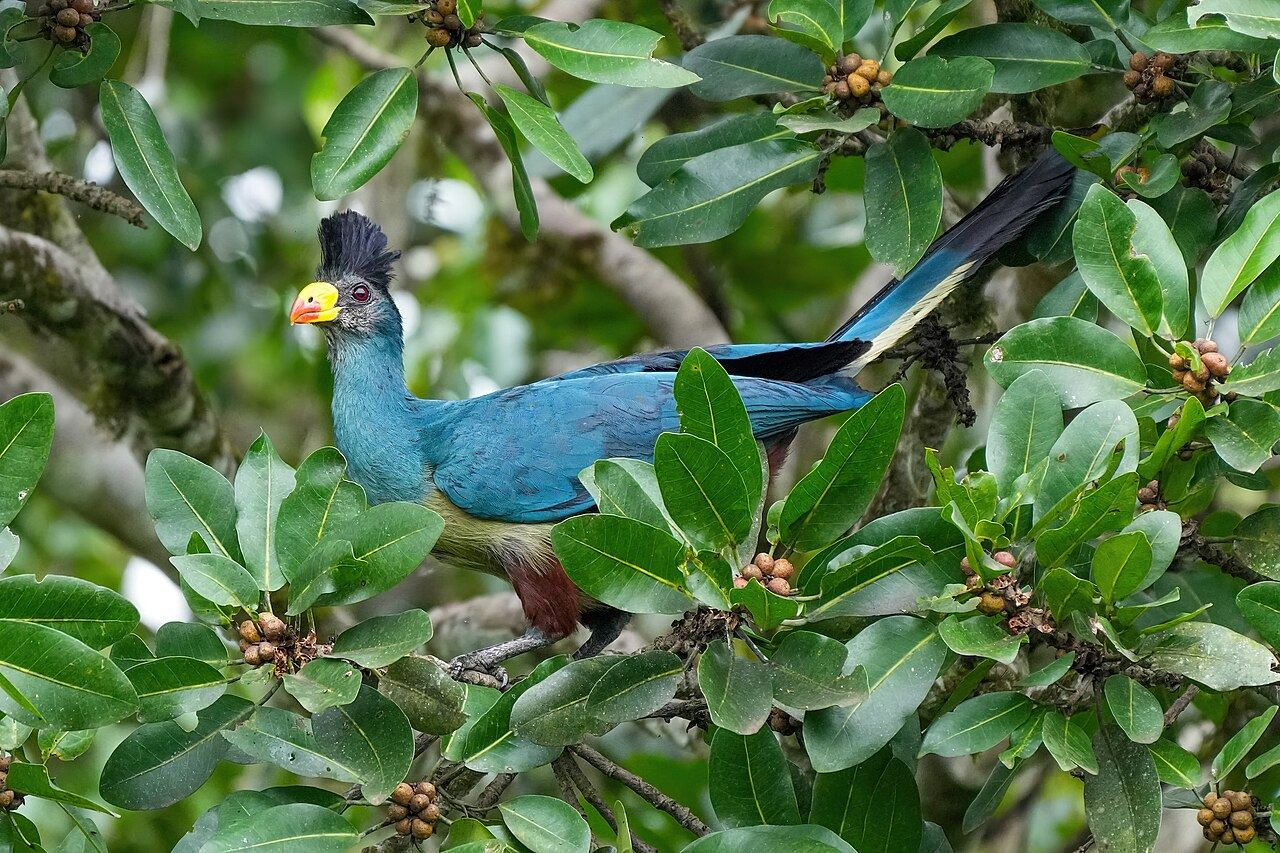
Photo: Giles Laurent, CC BY-SA 4.0 Great blue turaco
LC · Least ConcernCorythaeola cristata
Photo chance on Karin’s trip65 %quite likely · Often easy to see in Bigodi
Where: In the Bigodi Wetland and Kibale Forest.
At around 75 centimetres, the great blue turaco is the largest turaco. It tends to clamber through the treetops rather than fly long distances.
-
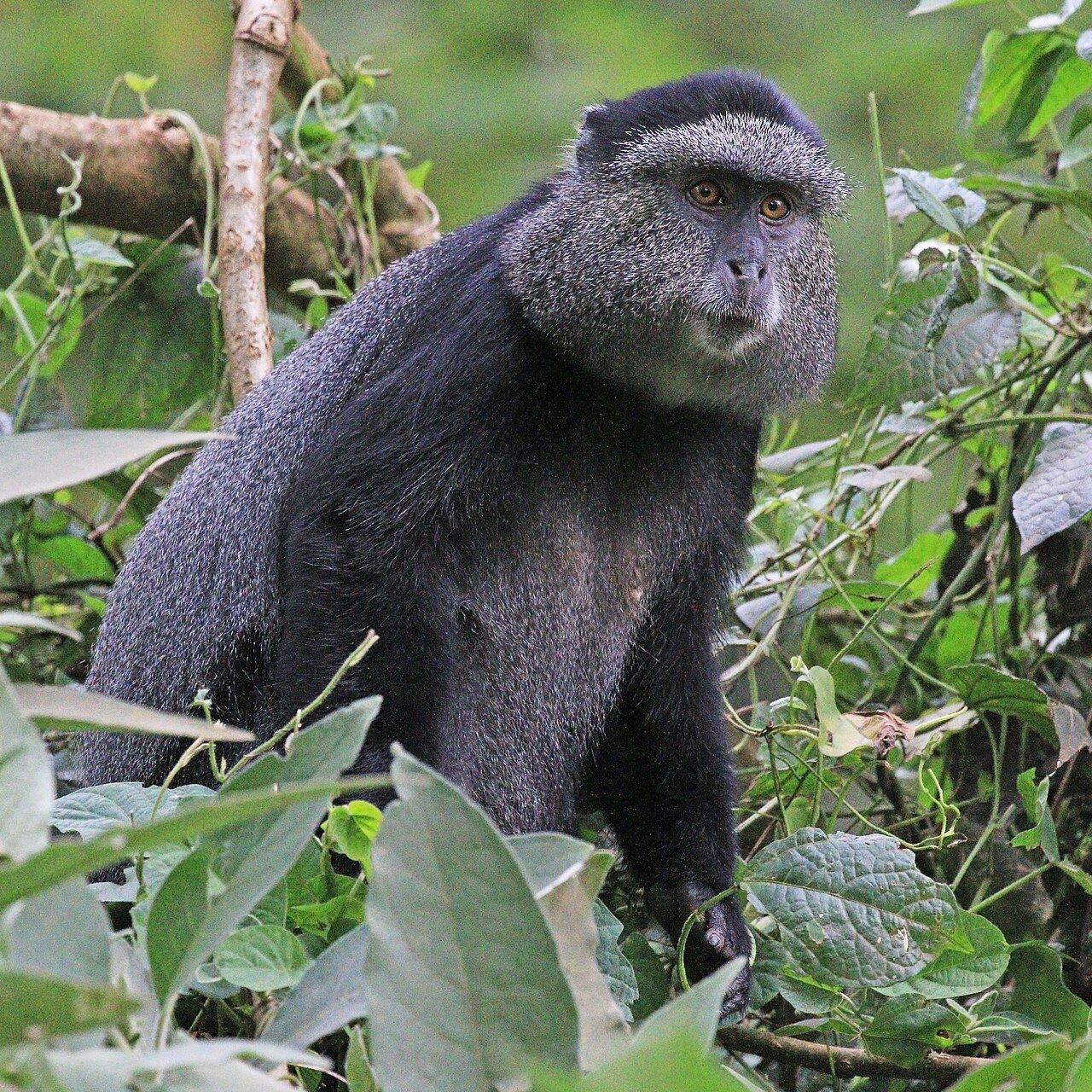
Photo: Charles J. Sharp, CC BY-SA 4.0 Blue monkey
LC · Least ConcernCercopithecus mitis
Photo chance on Karin’s trip55 %quite likely · Widespread, but often high in the canopy
Where: In the forests of Kibale, Bwindi and Mgahinga.
The blue monkey lives in groups with a single adult male. The golden monkey used to be considered one of its subspecies.
-
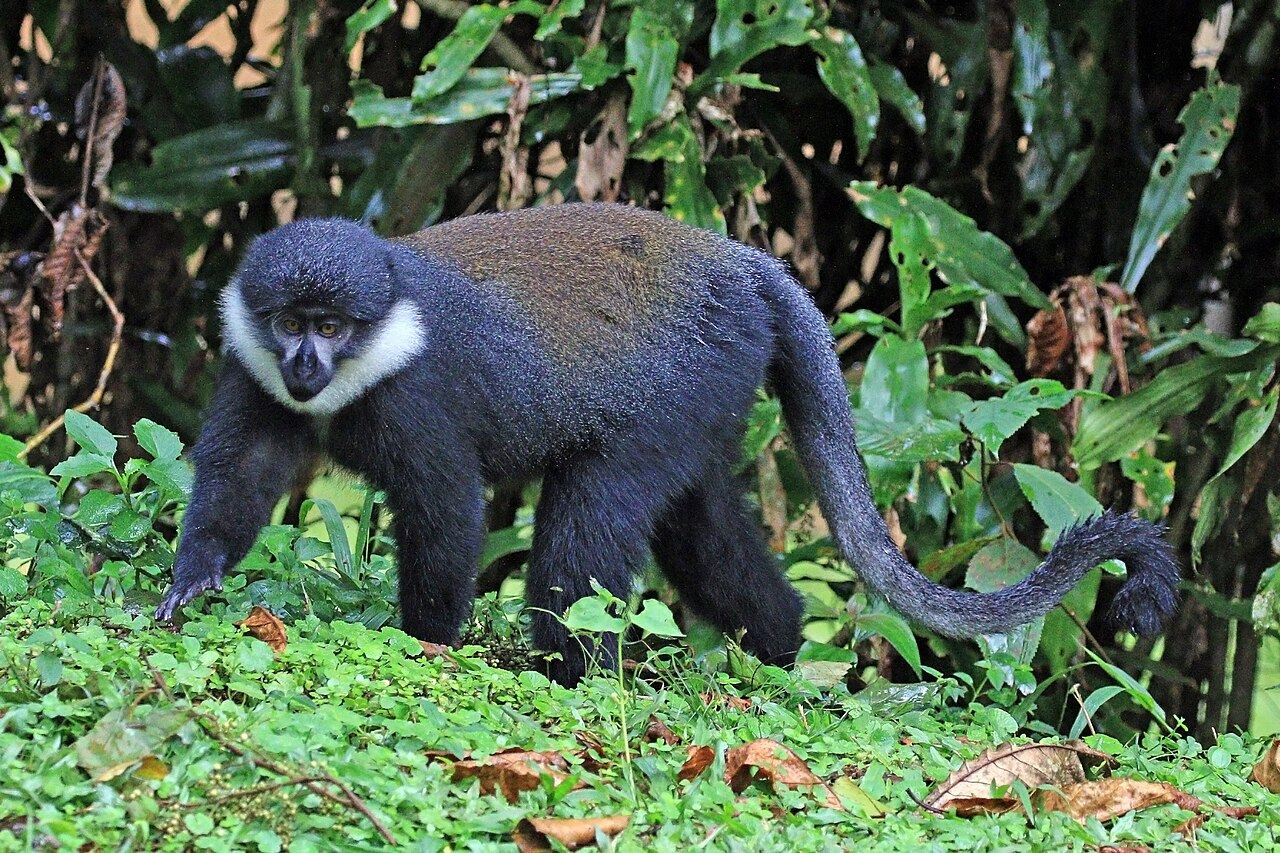
Photo: Charles J. Sharp, CC BY-SA 4.0 L'Hoest's monkey
VU · VulnerableAllochrocebus lhoesti
Photo chance on Karin’s trip45 %with luck · Regular in Bwindi, but shy
Where: In Bwindi Impenetrable National Park and Kibale Forest, often on the forest floor.
L’Hoest’s monkey has a striking white beard and spends a lot of time on the forest floor. It lives only in the highlands of the Albertine Rift.
-
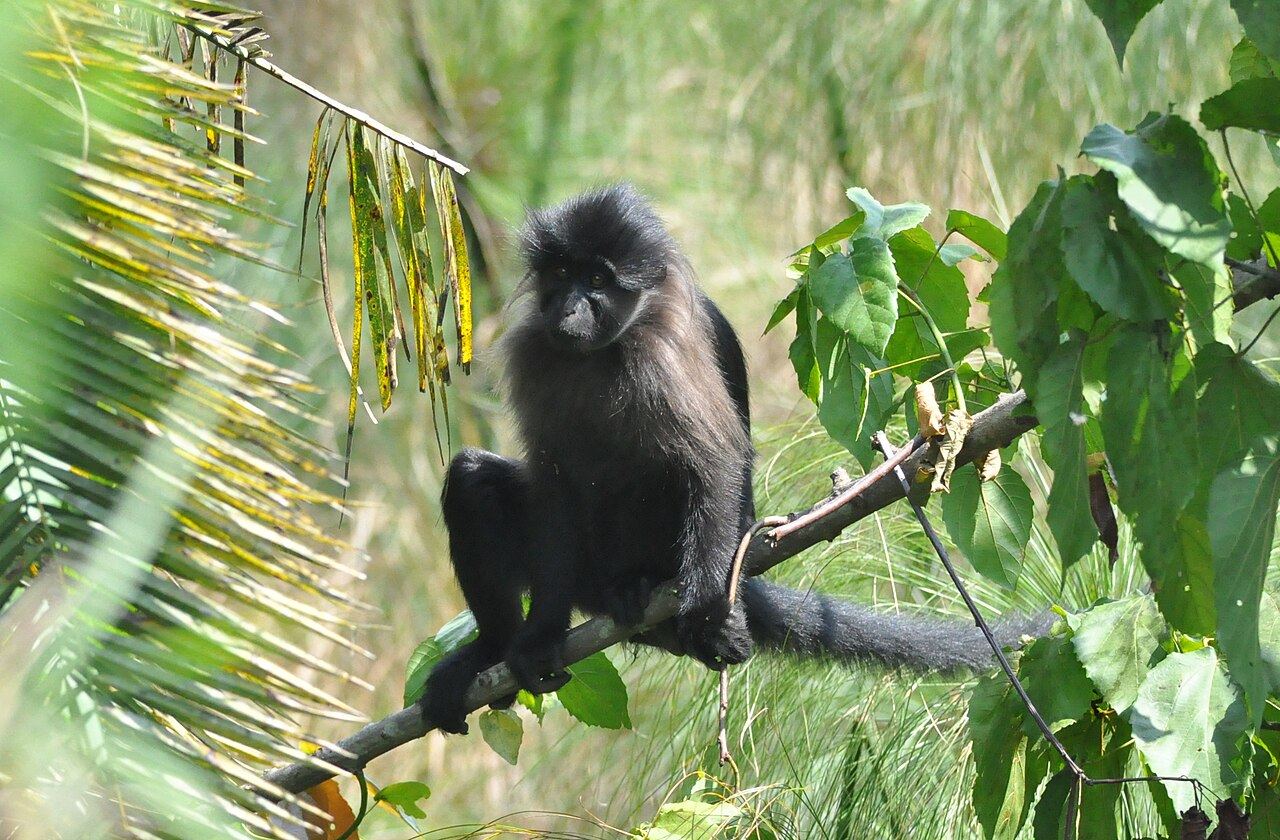
Photo: Marie de Carne, CC BY-SA 4.0 Uganda mangabey
VU · VulnerableLophocebus ugandae
Photo chance on Karin’s trip40 %with luck · Groups are occasionally seen in Kibale
Where: In Kibale Forest and the Bigodi Wetland.
The Uganda mangabey was only described as a separate species in 2007 and occurs only in Uganda. In Kibale Forest it lives in groups high in the treetops.
-
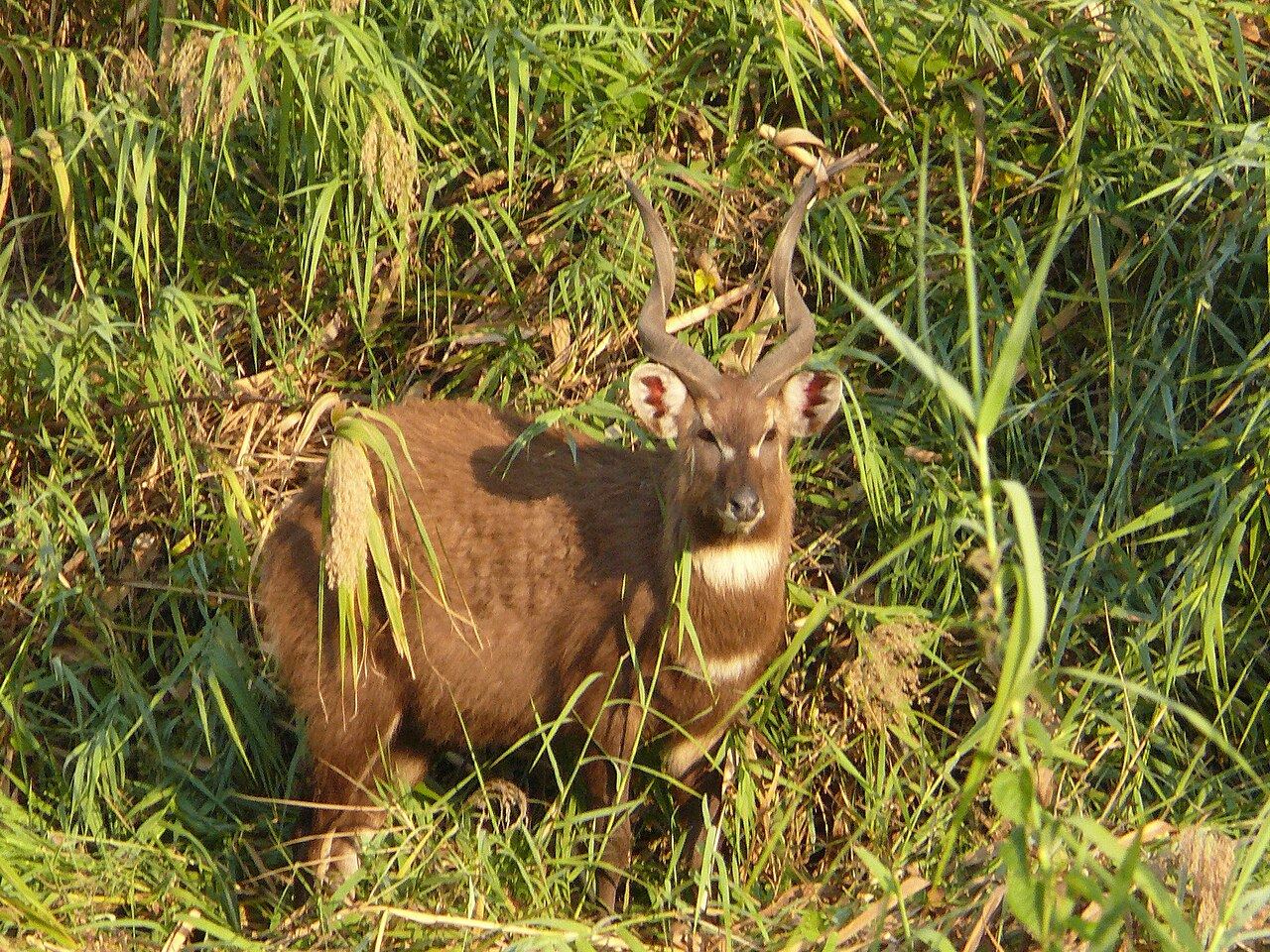
Photo: Tony Rebelo, CC BY-SA 4.0 Sitatunga
LC · Least ConcernTragelaphus spekii
Photo chance on Karin’s trip10 %with a lot of luck · Rarely seen, usually only briefly in the thicket
Where: Very shy, in the papyrus of the Bigodi Wetland and Mabamba Swamp.
The sitatunga is a swamp antelope with long, splayed hooves. When threatened, it submerges in the water up to its nose.
-
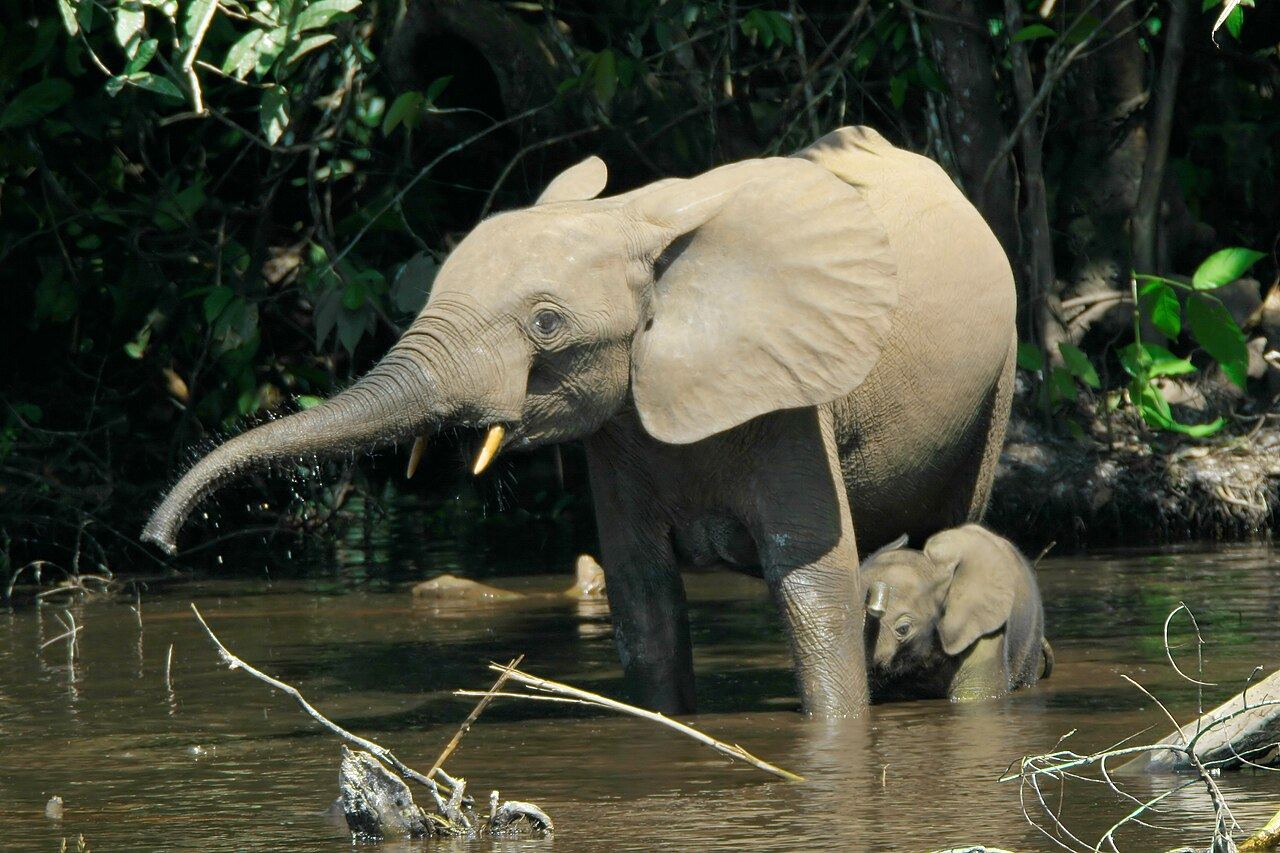
Photo: Thomas Breuer, CC BY 2.5 African forest elephant
CR · Critically EndangeredLoxodonta cyclotis
Photo chance on Karin’s trip8 %with a lot of luck · Elephants are present in Kibale, but encounters are rare
Where: In Kibale Forest, rarely seen on foot.
Forest elephants are smaller than savanna elephants and have straight, downward-pointing tusks. Their population has shrunk by more than 86 percent in 31 years.
Threatened animals in Uganda
Status according to the IUCN Red List
- CR African forest elephant Critically Endangered
- EN Mountain gorilla Endangered
- EN Chimpanzee Endangered
- EN Golden monkey Endangered
- EN Ugandan red colobus Endangered
- EN Grey crowned crane Endangered
- VU Shoebill Vulnerable
- VU L'Hoest's monkey Vulnerable
- VU Uganda mangabey Vulnerable
Frequently asked questions
Which animals can you see in Uganda?
On Karin’s trip through Uganda, the best photo chances are Mountain gorilla, Chimpanzee, Golden monkey, Ugandan red colobus, Mantled guereza and Red-tailed monkey. This page presents 16 species with their estimated photo chance.
Which animals are threatened in Uganda?
According to the IUCN Red List, the threatened species in Uganda include African forest elephant (Critically Endangered), Mountain gorilla (Endangered), Chimpanzee (Endangered), Golden monkey (Endangered), Ugandan red colobus (Endangered), Grey crowned crane (Endangered), Shoebill (Vulnerable), L'Hoest's monkey (Vulnerable) and Uganda mangabey (Vulnerable).
Mountain gorilla: how good is the photo chance in Uganda?
On Karin’s trip the chance is estimated at about 98% (Habituated groups, sighting success per trek close to 100%). On two gorilla treks in Bwindi Impenetrable National Park.
Other countries
The photo chance is an estimate for Karin’s route and travel season, based on published sighting information from parks and safari operators. Wild animals keep to no schedule, so there is no guarantee. Conservation status follows the IUCN Red List.
Uganda trip, Sep 2027 and Feb 2028 · View the trip →