In short
The long dry season from late June to October and the short dry season from about January to February are best suited to a safari in northern Tanzania. In January and February the herds of the Great Migration are in the southern Serengeti and around Ndutu, where most wildebeest calves are born. The long rainy season from roughly March to May is the quietest time, with a green landscape but some tracks that are difficult to drive.
- Dry season
- Transition or short rains
- Long rainy season
- Calving season in Ndutu
Weather in Tanzania
The climate in Tanzania
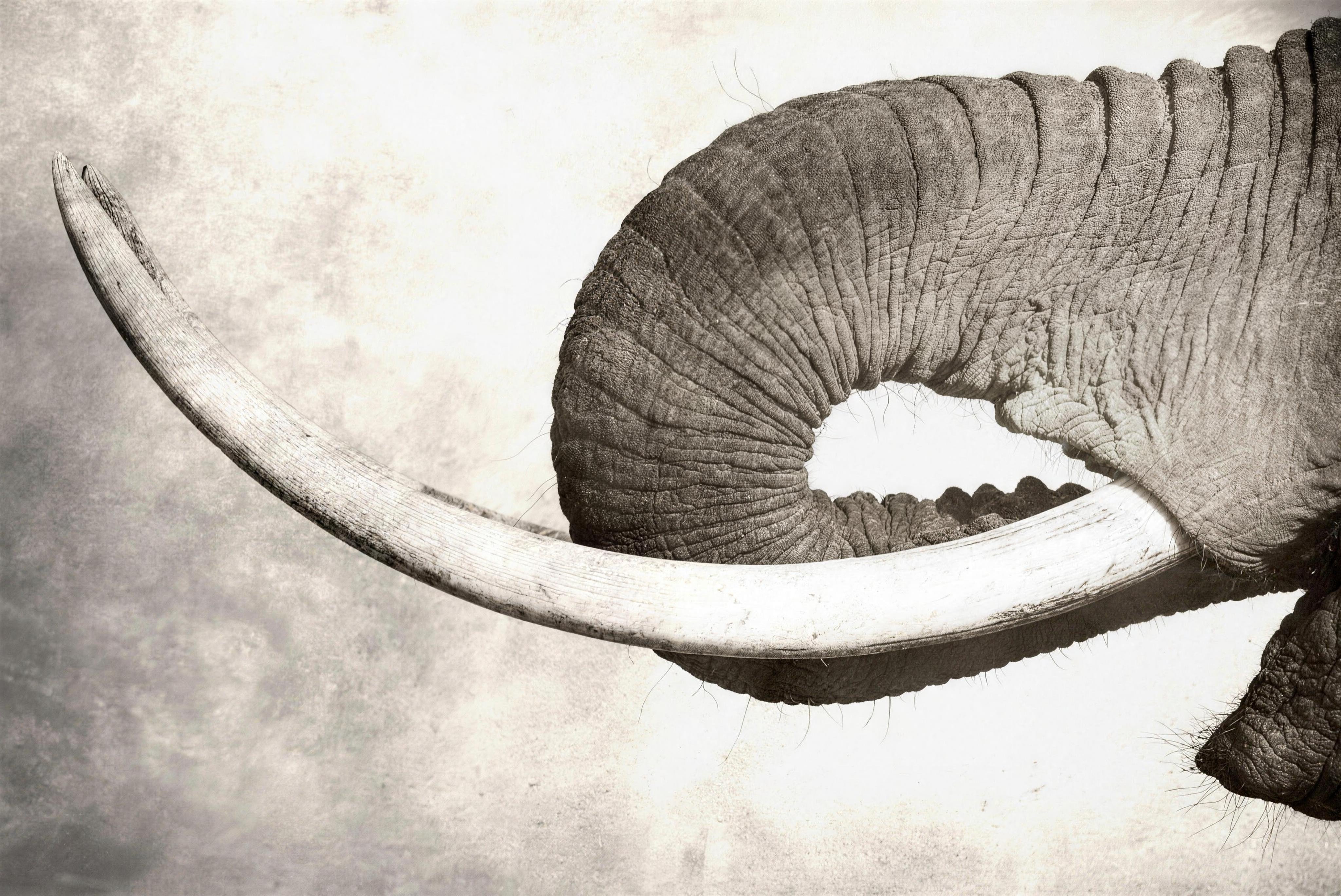
Elephants on the savannah
The well-known safari areas in northern Tanzania, that is the Serengeti, Ndutu, Ngorongoro and Tarangire, lie at about 1,000 to 2,000 metres. During the day it is usually warm there, and cool early in the morning and in the evening. On the rim of the Ngorongoro Crater, at over 2,000 metres, the nights can get really cold.
As in Kenya, there are two rainy seasons. The long rains last roughly from March to May, and the short rains usually fall in November and December. In between come the long dry season from late June to October and a shorter, drier phase in January and February. When and how heavily it rains changes from year to year.
Month by month
Tanzania by month
This overview applies to the safari areas in the north of the country. The information is based on experience and is not a promise for any particular year.
| Month | Weather | For a safari |
|---|---|---|
| January and February | Short dry season, warm, occasional showers | Very good. The herds are in the southern Serengeti and in Ndutu, the wildebeest are calving and predators are very active. |
| March | Transition, first longer rains | Good. The herds are usually still in the south and the landscape is green. |
| April and May | Long rainy season | Limited. Some tracks are difficult to drive and some camps close. On the other hand, there are hardly any other vehicles about. |
| June | Start of the dry season | Good. The herds move through the central and western Serengeti. |
| July to October | Long dry season, cool mornings | Very good. The herds are in the northern Serengeti on the Mara River, high season with the most visitors. |
| November and December | Short rains, mostly showers | Good. The herds move back south and the landscape turns green again. |
Ndutu and the southern Serengeti
The calving season in Ndutu
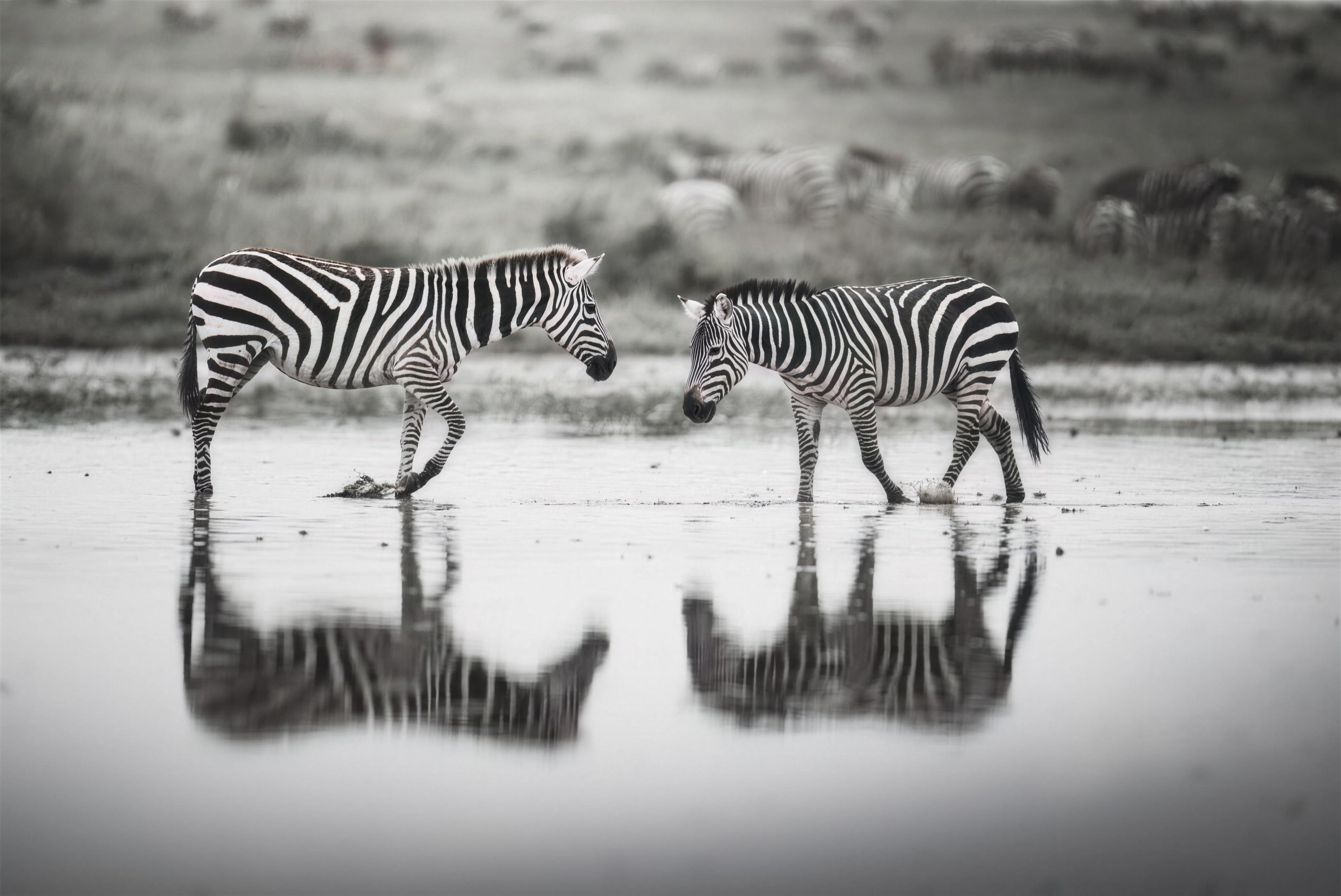
Zebras in the Serengeti
From about December, the herds of the Great Migration gather on the short-grass plains of the southern Serengeti and around Ndutu. After the short rains, nutritious grass grows there. Within a few weeks, usually in February, the wildebeest give birth to most of their calves.
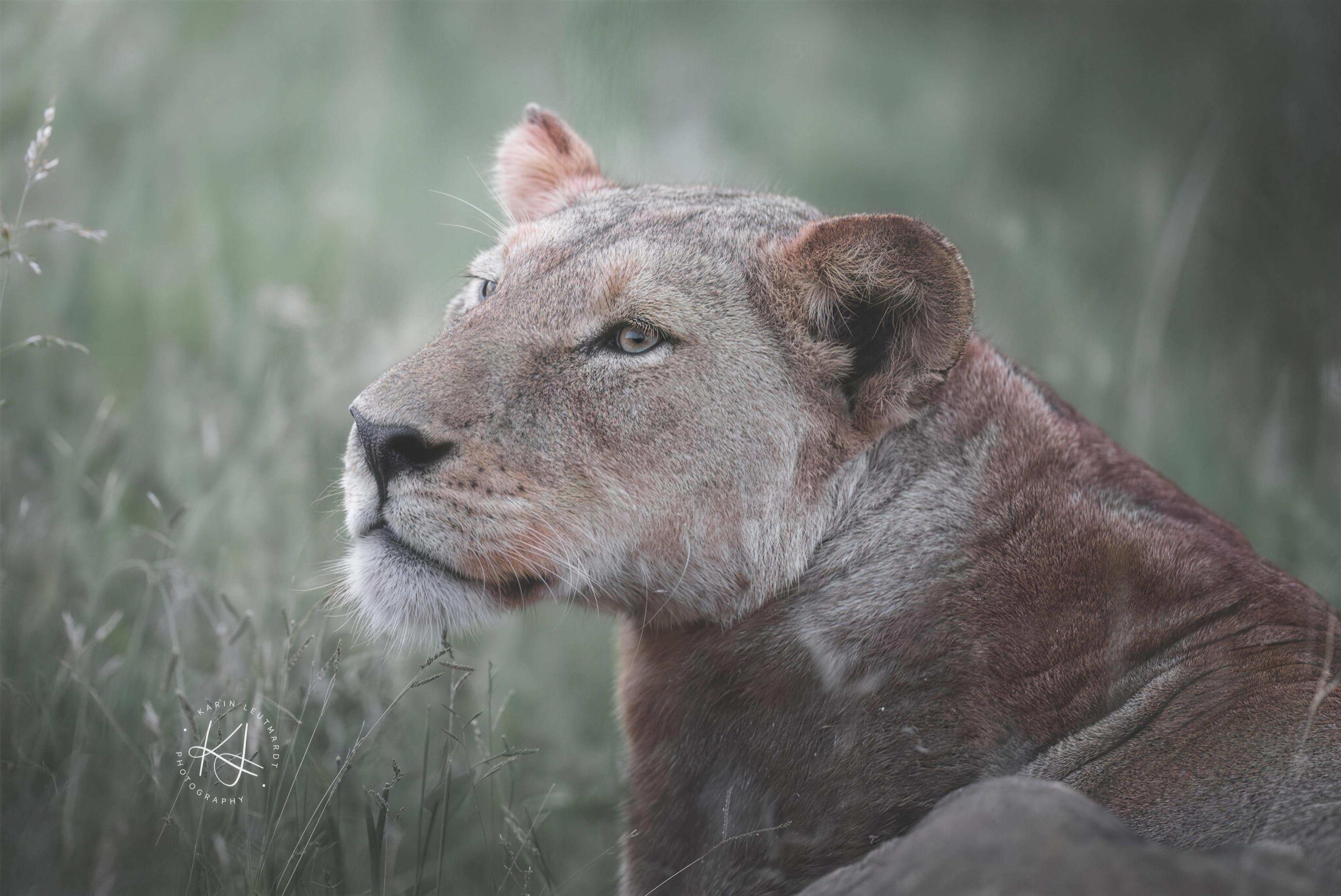
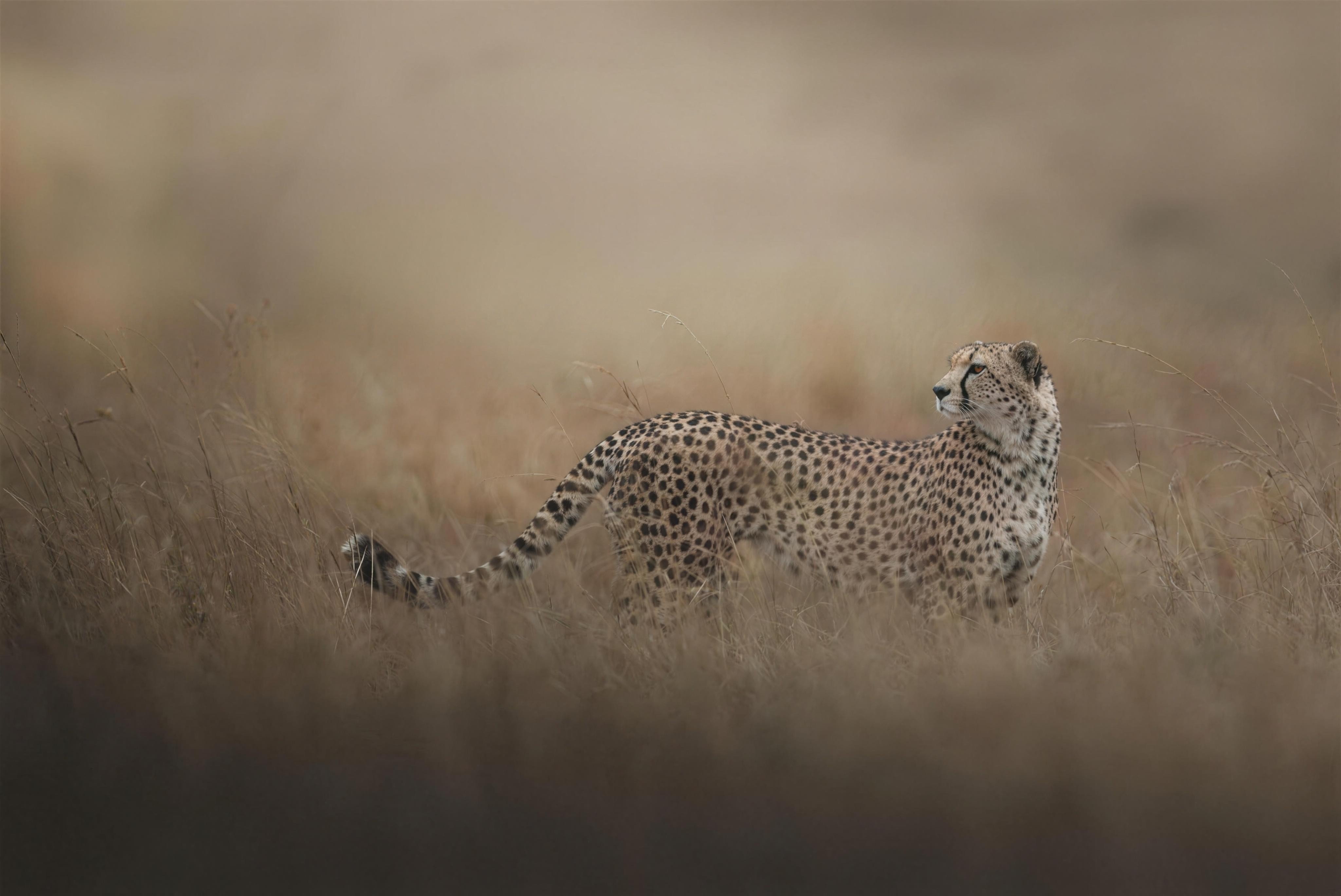
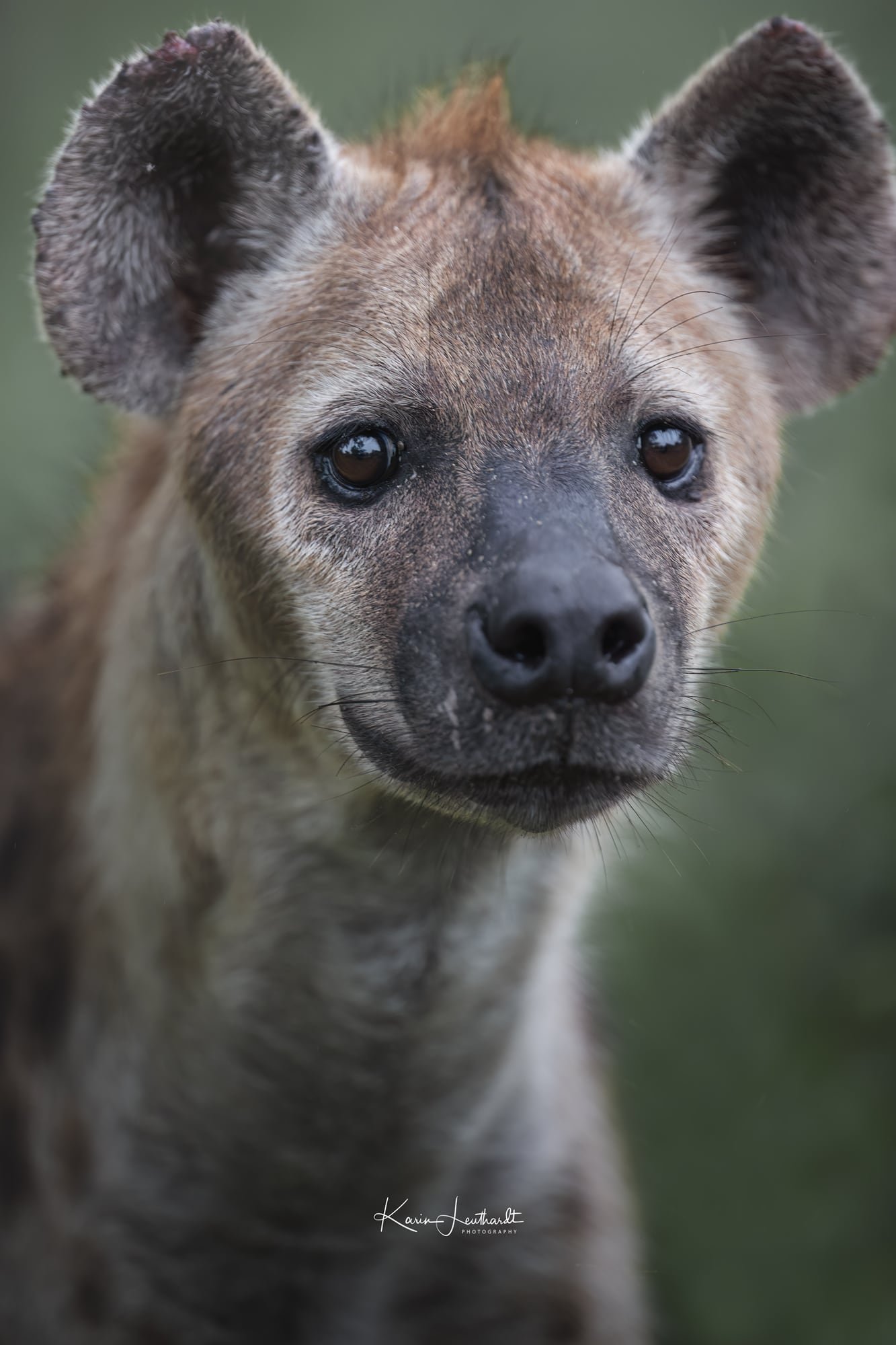
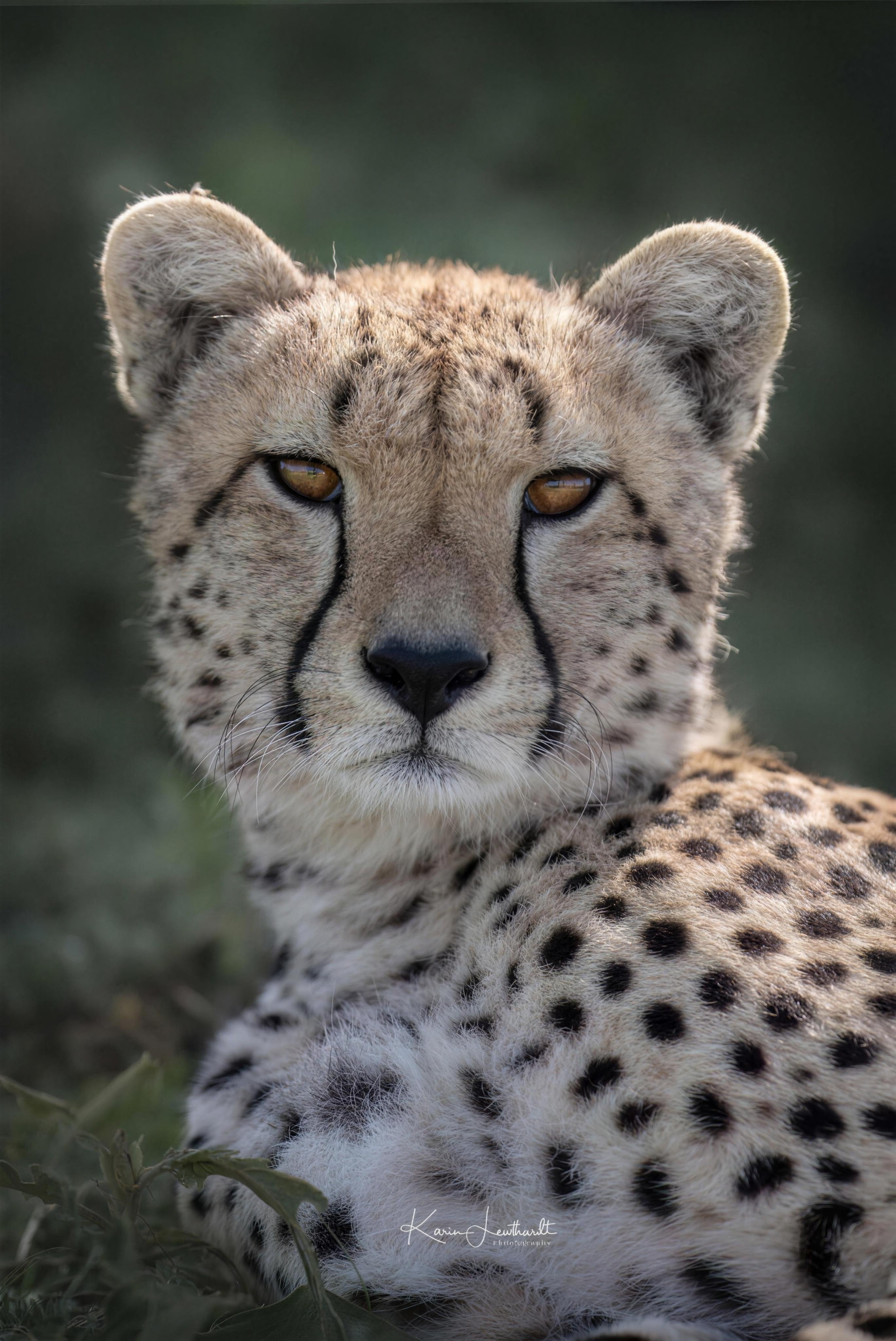
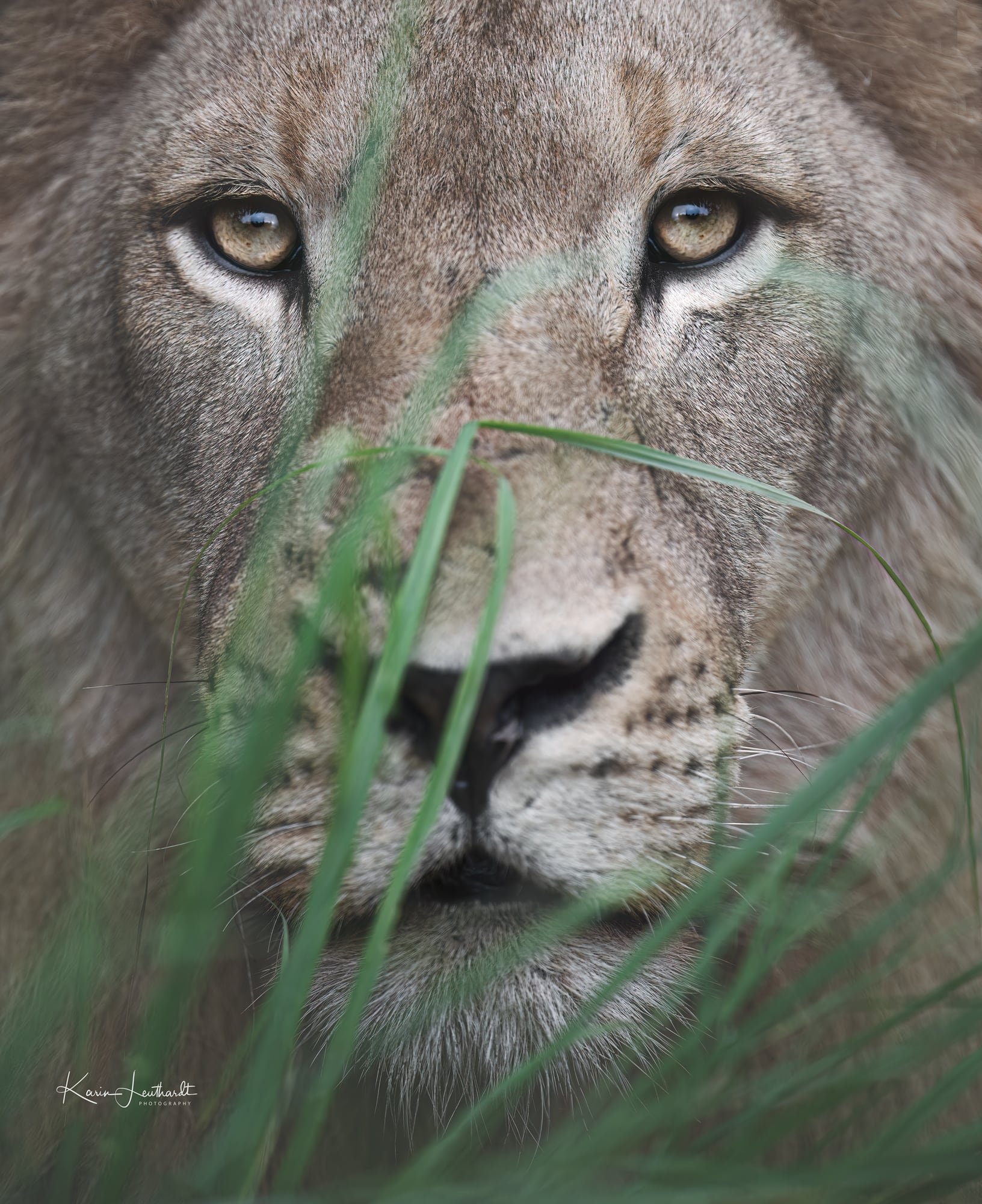
For predators this is a time of plenty. Lions, cheetahs, hyenas and jackals stay close to the herds, and hunting scenes are seen more often than at other times of year. Exactly when the births begin and where the herds are depends on the rain and is a little different every year.
Ndutu lies in the Ngorongoro Conservation Area on the border with Serengeti National Park. There are no fences between the two areas, and the herds move freely back and forth.
Great Migration
Where the herds are over the year
Well over a million wildebeest, together with zebras and gazelles, move in a circle all year round through the Serengeti and the Masai Mara in Kenya. They follow the rain and the fresh grass. Roughly, the year looks like this:
From December to March the herds are in the southern Serengeti and in Ndutu, where the calves are born. In April and May they move north-west through the central Serengeti. In June and July they reach the west and the Grumeti River. From July to October they are in the northern Serengeti and in the Masai Mara, with the well-known crossings of the Mara River. In November they move back south.
This is a pattern, not a timetable. Rain, grass and the behaviour of the herds shift the migration by a few weeks every year.
Ndutu, Serengeti, Ngorongoro
Best time to visit the individual areas
The protected areas in northern Tanzania lie close together and combine well on one trip. Which area is most worthwhile when depends mainly on where the herds are at the time.
Ndutu
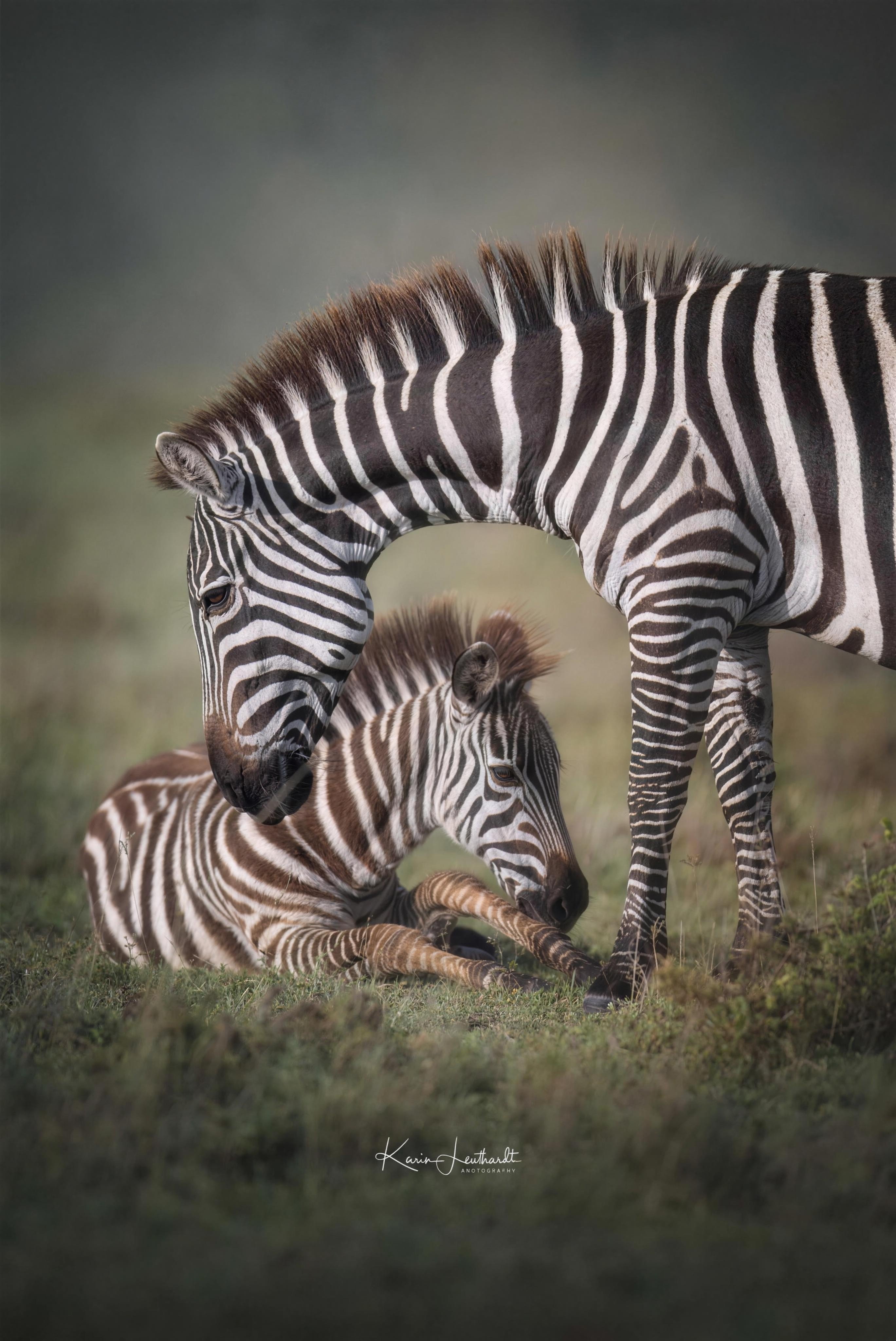
December to March, especially February, for the calving season. Large herds with young animals are on the open plains then, and lions, cheetahs and hyenas are nearby.
Serengeti National Park
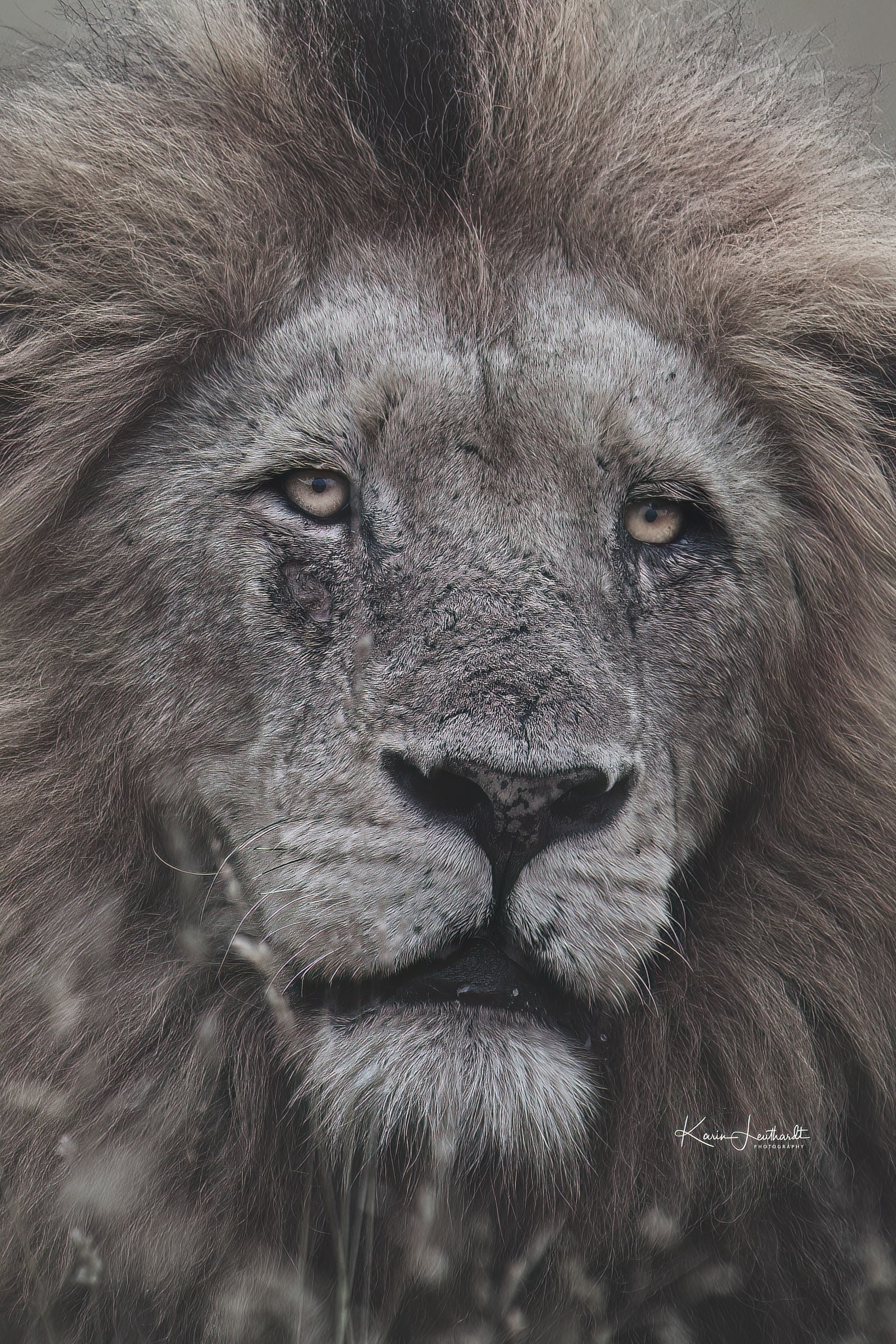
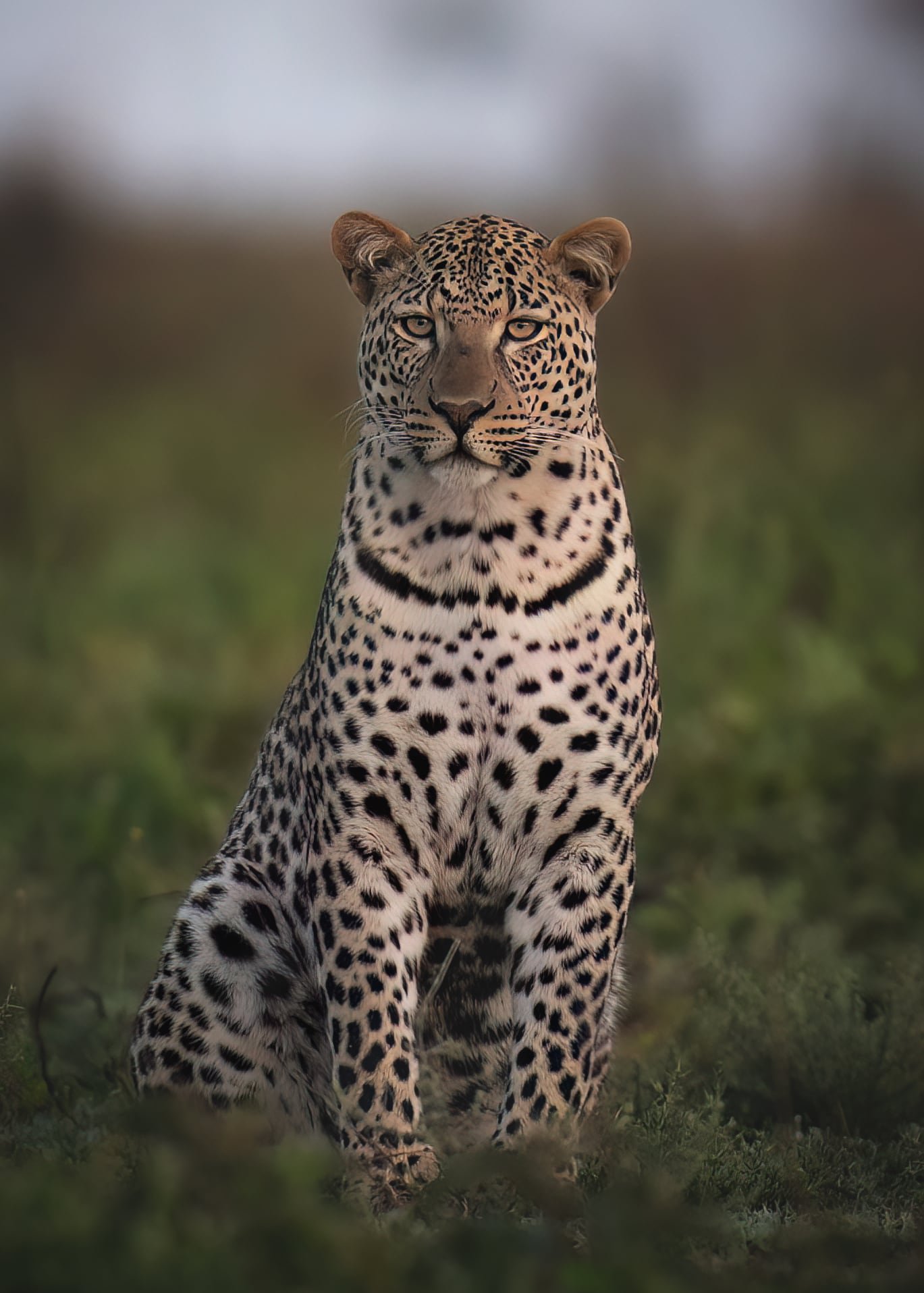
Good for wildlife watching all year round. Where the herds are changes with the season. Lions, leopards and cheetahs live in the park all year.
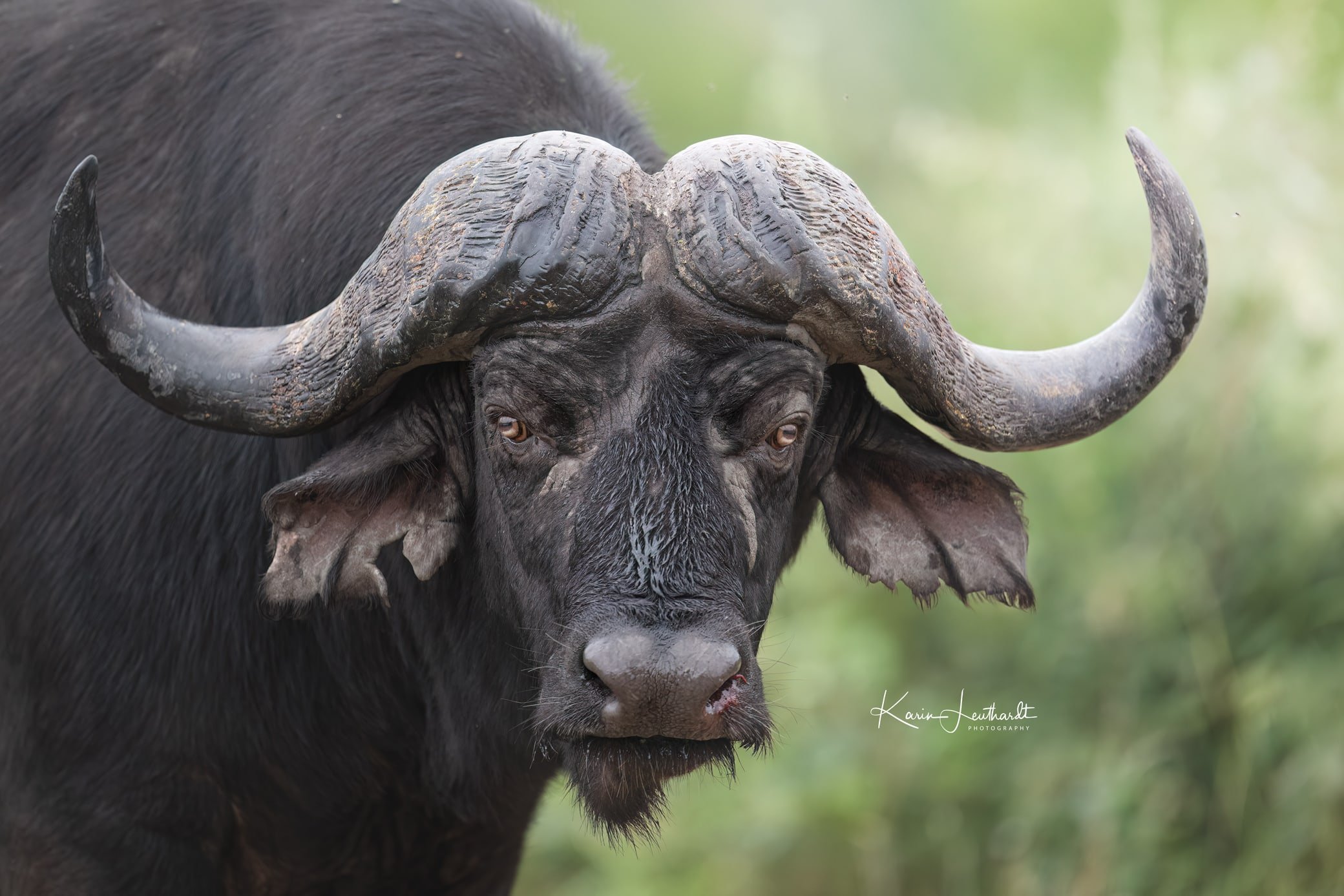
Ngorongoro Crater
A collapsed volcano with walls about 600 metres high. Many animals live on the crater floor all year round, among them buffalo, lions and rare black rhinos. On the crater rim it gets cold at night.
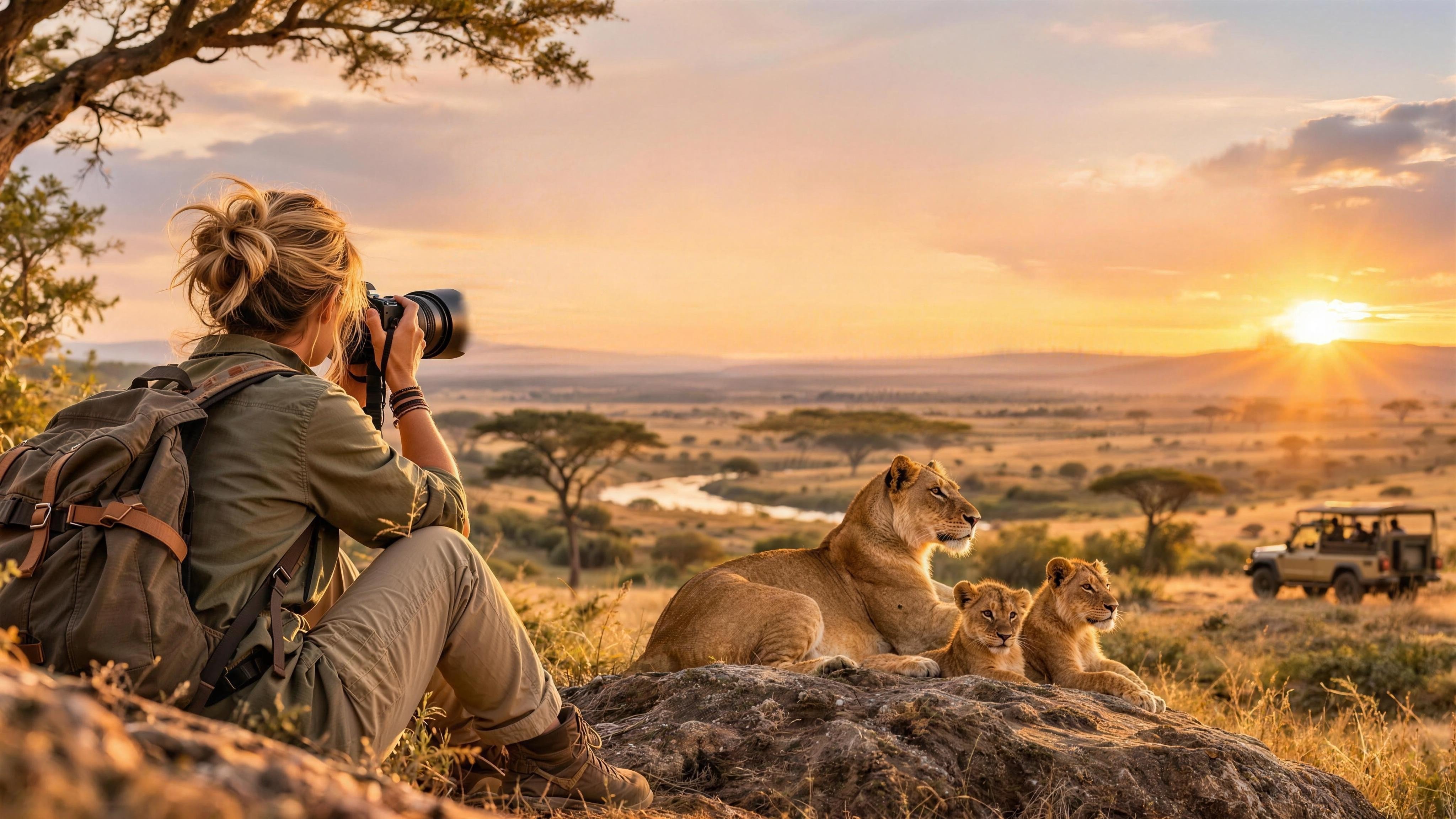
Tanzania safari
Ndutu and the Serengeti on one trip
Safari vehicle in the Serengeti in the evening
If you travel during the calving season, it is best to combine Ndutu with the southern and central Serengeti. That way you stay close to the herds and also experience the vastness of the national park.
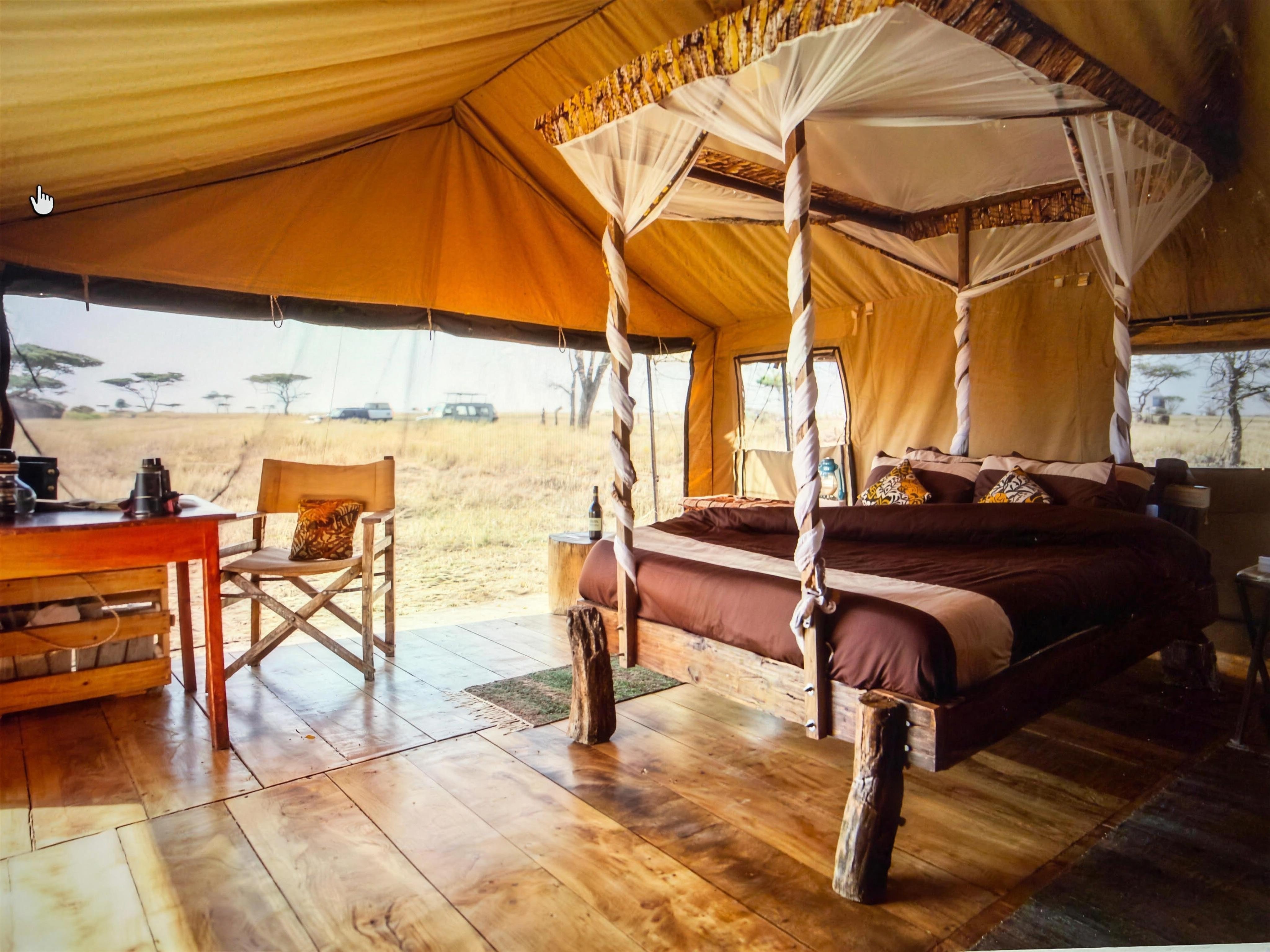
One example is Karin’s photo safari: arrival at Kilimanjaro Airport, three nights in Ndutu and four nights in a luxury tented camp in the Serengeti, from 28 February to 7 March 2027, with a maximum of 6 participants.
Preparation
Clothing and equipment
In Tanzania, too, dressing in layers has proved its worth: a fleece or a light down jacket for the morning game drive, with airy clothing in khaki, beige or olive underneath. Some areas have tsetse flies, which are attracted to dark blue and black clothing. For the transitional months, pack a light rain jacket.
Tanzania is a malaria area. Get medical advice on vaccinations and malaria prevention before you travel.
For your camera, a dust cover and a beanbag to rest it on in the vehicle are useful. On dusty tracks it is best not to change lenses in the vehicle.
FAQ
Frequently asked questions about when to travel
When is the best time for a safari in Tanzania?
In the dry seasons from late June to October and from about January to February. The tracks are easy to drive then and the animals are easier to find.
When is the calving season in Tanzania?
The wildebeest usually give birth to their calves between late January and March, with most births in February. The herds are then in the southern Serengeti and around Ndutu.
Where is the Great Migration in February?
In February the herds are usually on the short-grass plains of the southern Serengeti and in the area around Ndutu in the Ngorongoro Conservation Area.
When can you see the river crossings in Tanzania?
The crossings of the Mara River usually take place between July and October in the northern Serengeti. Exactly when and where cannot be predicted.
Can you travel to Tanzania in the rainy season?
Yes, with some limitations. In the long rainy season from April to May some tracks are difficult to drive and some camps are closed. The short rains in November and December usually disrupt a safari very little.
How warm is it in Tanzania?
In the safari areas in the north it is usually warm during the day, and cool in the morning and evening. On the rim of the Ngorongoro Crater it can get cold at night.